How to Cut B2B eCommerce Delivery Time by 50%

Introduction
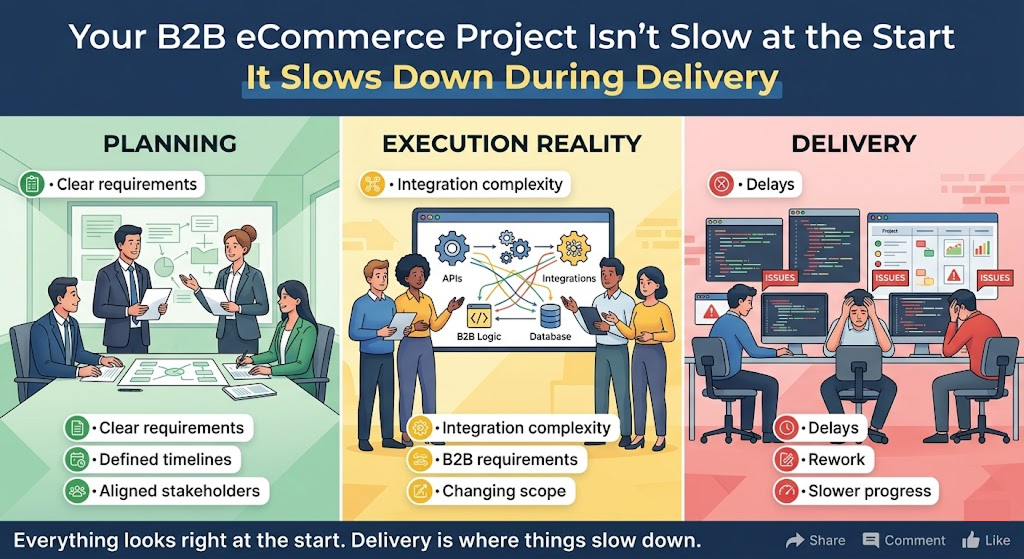
Most B2B eCommerce projects don’t slow down because of technology. They slow down because of how they’re delivered.
If timelines keep stretching, costs keep increasing, or features keep getting reworked, the issue usually isn’t the platform itself. It’s the delivery approach behind it.
And that distinction matters more than most teams realize.
Slow delivery isn’t just a technical issue
In B2B commerce, delays don’t stay contained within the project. They ripple outward into the business.
When delivery slows down, it affects revenue, customer experience, and even your competitive position in the market. What looks like a timeline issue on paper quickly turns into something much bigger.
Every delay comes with real consequences:
• Missed market opportunities
• Increased delivery costs
• Frustration across teams and stakeholders
At a fundamental level, every delayed launch is revenue you don’t recover.
Where B2B projects start to break down
These delays don’t usually come from one major failure. They build up through a pattern of common issues that most B2B teams experience.
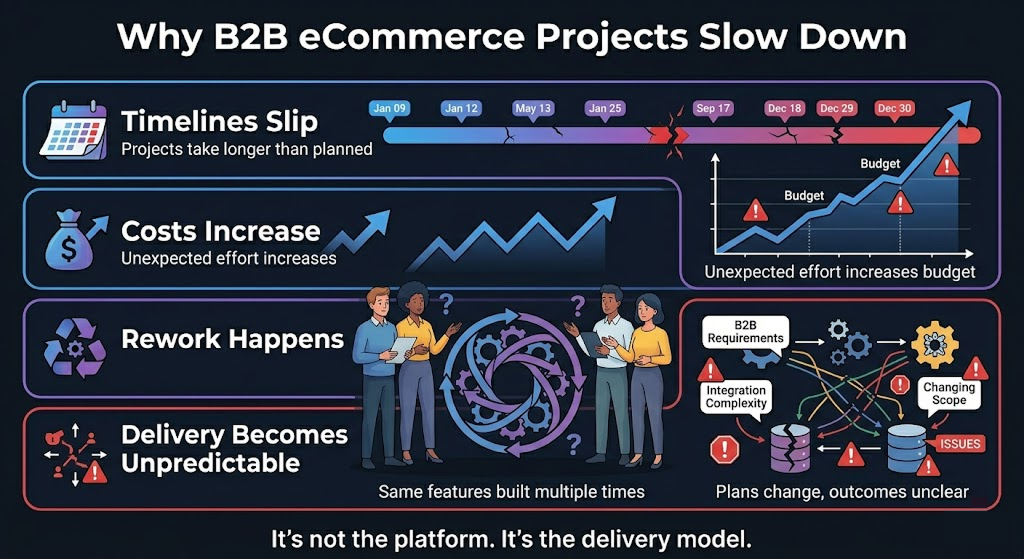
One of the most visible problems is that projects take longer than planned. B2B implementations often extend beyond expected timelines because workflows aren’t clearly defined, teams repeat work, and execution models aren’t efficient. The result is simple: slower time to market and delayed revenue generation.
At the same time, costs tend to increase as delivery progresses. Unexpected changes, ongoing rework, and inefficiencies push engineering effort higher than expected. What started as a controlled investment turns into budget overruns and reduced ROI.
Rework is another major factor. When features aren’t clearly defined early on, teams are forced to revisit the same functionality multiple times. This creates wasted effort, slows progress, and reduces overall efficiency across the project.
As these issues stack up, delivery begins to feel unpredictable. Timelines shift, priorities change, and outcomes become harder to forecast. For the business, this leads to a lack of confidence in both timelines and execution.
The shift leading teams are making
To address this, many leading B2B organizations are rethinking how they approach delivery altogether.
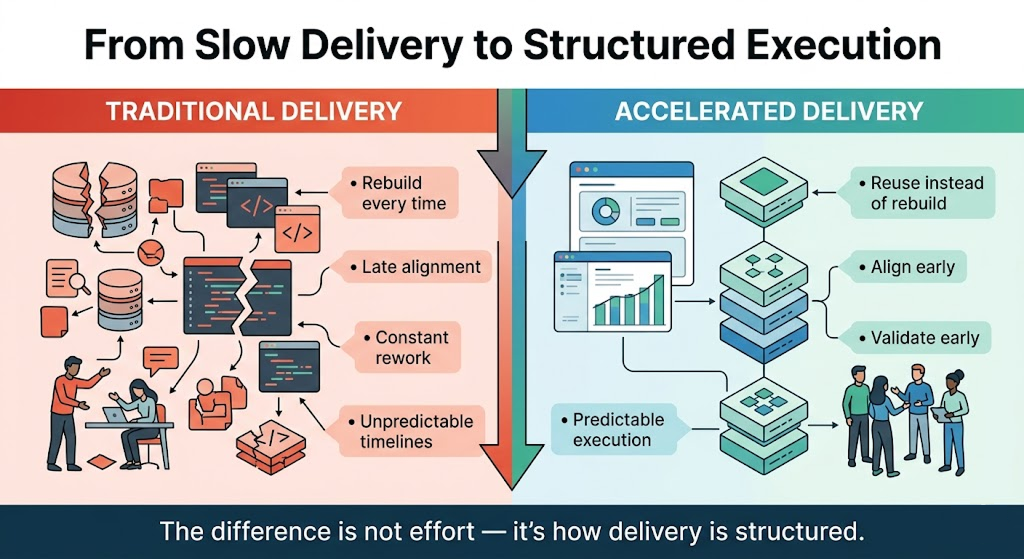
Instead of relying on fully custom builds every time, they’re moving toward more structured approaches. These approaches prioritize reuse, early alignment, and predictable workflows.
It’s a shift away from reacting to problems during development—and toward preventing them before they happen.
A more structured way to deliver B2B commerce
This is exactly where a more structured framework comes into play.
Clouda’s B2B Acceleration Framework is designed to reduce delivery friction by introducing reusable building blocks, clearer workflows, and faster validation cycles. Importantly, it does this without locking businesses into a specific platform.
The focus isn’t just on speed.it’s on making delivery more consistent and predictable.
What this looks like in practice
In practice, this approach changes how projects are executed from the very beginning.
It starts with clarity before development. Features are defined early using structured design flows, ensuring that everyone is aligned before development begins. This reduces ambiguity and prevents misalignment later in the process.
Instead of building everything from scratch, teams use reusable building blocks. These are proven patterns that accelerate implementation and improve consistency across the platform.
Early validation is another key part of the process. Features can be reviewed and refined before full development, which significantly reduces rework and improves delivery speed.
At the same time, the approach remains flexible. Custom requirements can still be supported without slowing down the overall delivery process, making it both adaptable and scalable.
The business impact of getting this right
When delivery is structured in this way, the impact is clear and measurable.
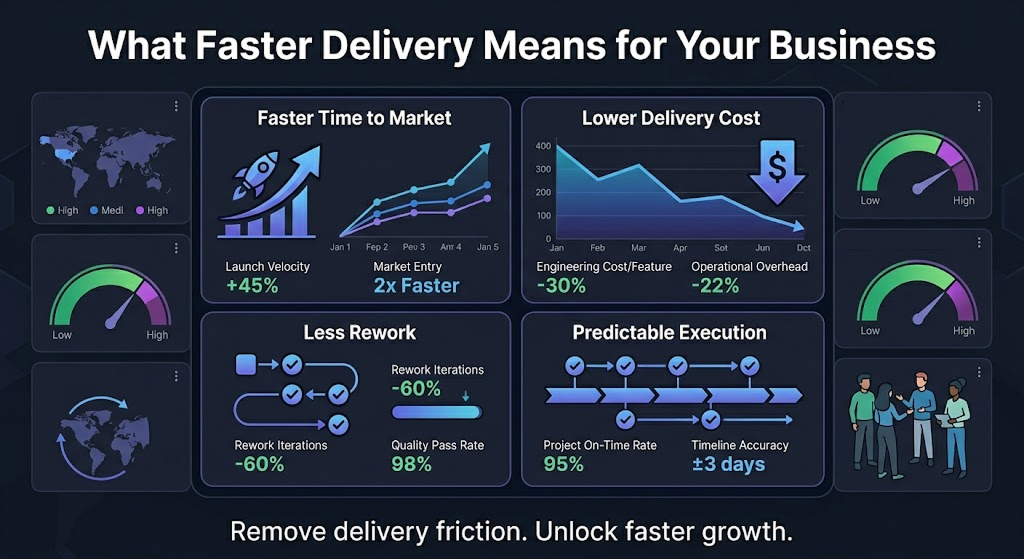
Teams are able to move faster, with better control over timelines and fewer unexpected delays. Costs become easier to manage because rework is reduced and effort is more predictable.
The result is:
• Faster time to market
• Better control over timelines
• Reduced delivery cost
• Fewer delays and rework
• Higher confidence in execution
AI is changing how fast teams can move
Another factor accelerating this shift is the use of AI.
AI acts as a delivery multiplier by helping engineering teams work more efficiently. It can accelerate development tasks, improve documentation, and support faster implementation,all while keeping human oversight in control.
This allows teams to increase output without increasing team size.
Why most teams still struggle to speed things up
Despite all of this, many teams still try to solve delivery challenges in the same way: by adding more resources or pushing teams harder.
But that approach rarely works.
Real acceleration doesn’t come from doing more work. It comes from eliminating unnecessary work and structuring delivery in a smarter way,through reuse, early alignment, and better workflows.
That’s the difference between teams that stay stuck in long delivery cycles and those that consistently move faster.
In the next article, we’ll break down exactly how leading teams are delivering B2B platforms significantly faster without increasing team size.
Because the companies that move fastest aren’t the ones doing more work. They’re the ones doing less of the wrong work.
Where to start
If your current projects are experiencing delays, it’s worth taking a closer look at how delivery is structured.
B2B complexity is inevitable but inefficient delivery doesn’t have to be.
Book a free B2B acceleration session with Clouda to get a clear view of where your current approach is causing delays and how to fix it.
Introduction
Slow delivery isn’t just a technical issue
Where B2B projects start to break down
The shift leading teams are making
A more structured way to deliver B2B commerce
What this looks like in practice
The business impact of getting this right
AI is changing how fast teams can move
Why most teams still struggle to speed things up
Where to start
Fix What’s Slowing Down Your B2B Delivery
Most delays in B2B ecommerce don’t come from the platform.They come from how delivery is structured. Book a session with our team to review your current approach, identify where time and effort are being lost, and understand how a more structured model can help you move faster without increasing complexity.
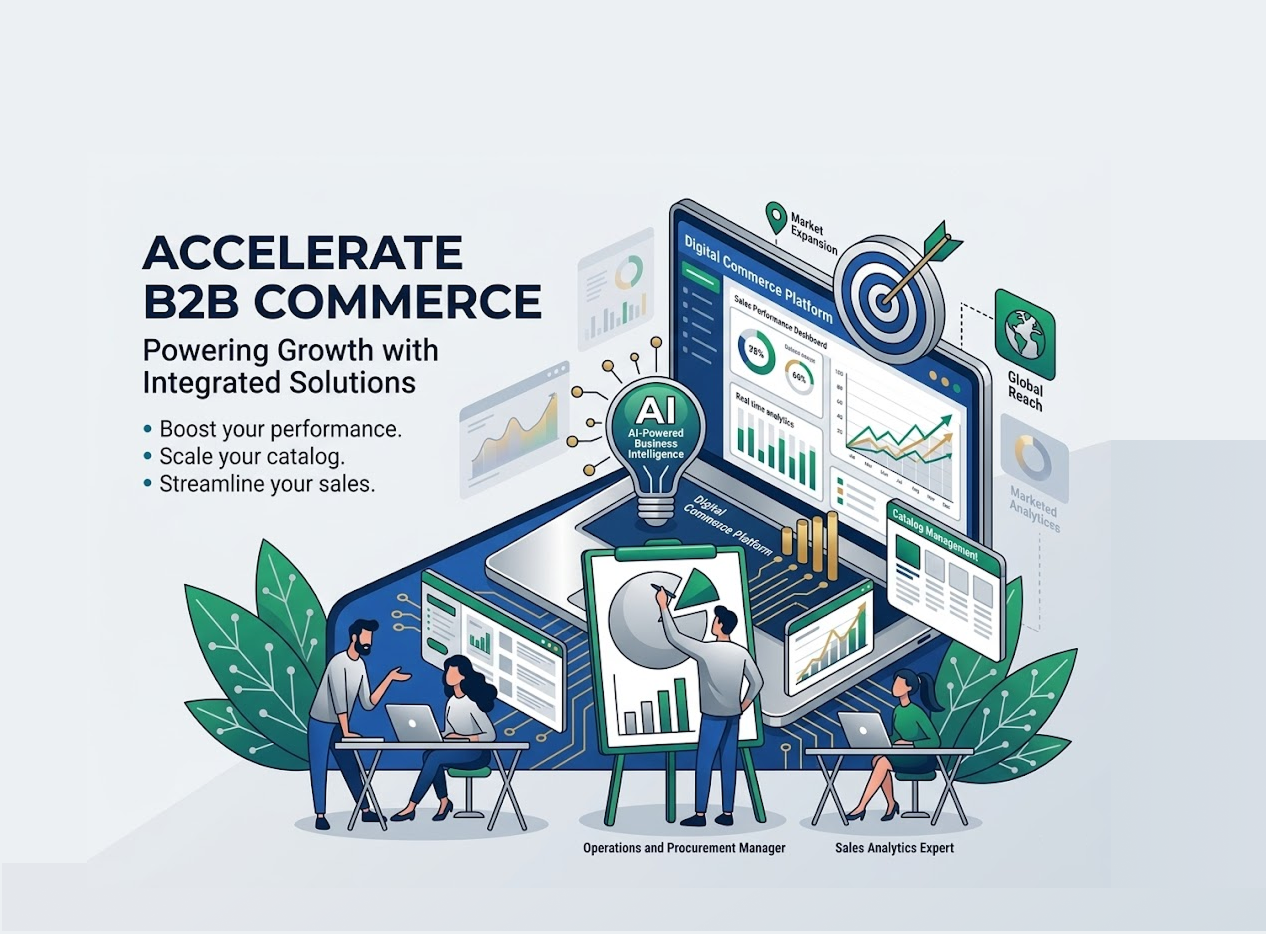
Most delays in B2B ecommerce don’t come from the platform.They come from how delivery is structured. Book a session with our team to review your current approach, identify where time and effort are being lost, and understand how a more structured model can help you move faster without increasing complexity.