Preparing B2B Commerce for AI with Strategic Roadmapping

The Current State of AI Adoption in B2B Commerce
Artificial intelligence has moved well beyond experimentation in B2B commerce. What began as isolated pilots in analytics or search has evolved into broader deployments across pricing, quoting, forecasting, and service operations.
For many organizations, the momentum is understandable. Competitive pressure is increasing. Customers expect faster response times and greater transparency. Boards are asking for evidence of digital advancement. AI is no longer positioned as optional innovation; it is increasingly treated as part of staying current.
What often receives less attention is structural readiness.
In most B2B environments, systems are deeply interconnected. ERP platforms, CRM systems, pricing engines, fulfillment infrastructure, and analytics layers have been layered over time. Introducing intelligent automation into that ecosystem without coordinated preparation can produce uneven results. Some initiatives perform well in controlled settings. Others surface weaknesses that previously remained manageable.
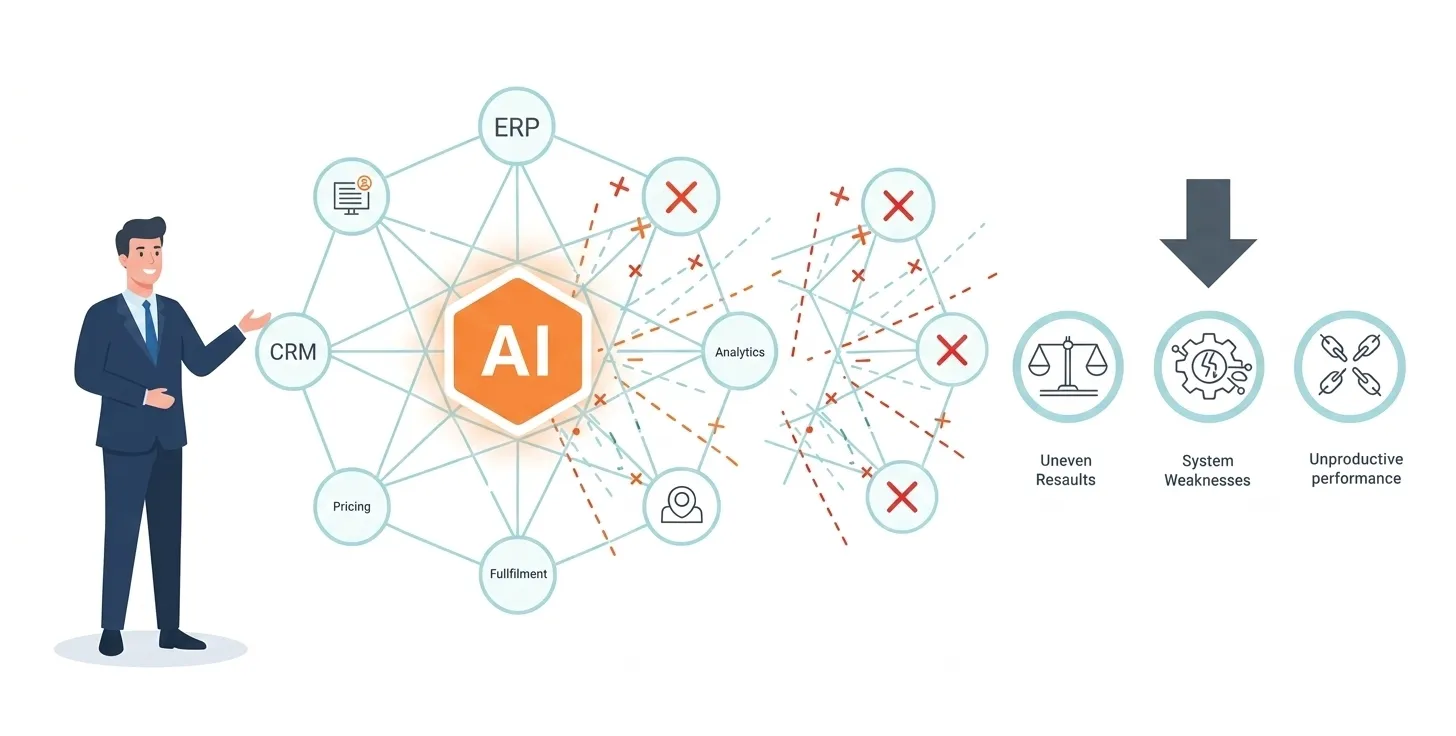
This is where strategic roadmapping becomes critical.
Without a roadmap, AI initiatives tend to operate as parallel efforts. With a roadmap, they are sequenced within a broader modernization strategy. The difference determines whether AI becomes an embedded capability or remains a collection of disconnected experiments.
The Expanding Scope of AI in B2B Operating Models
AI in B2B commerce rarely limits itself to front-end experiences. Its impact increasingly extends into core operating decisions. Pricing governance provides a clear example. Algorithmic recommendations influence discount structures, margin thresholds, and contract adherence. Forecasting systems shape procurement commitments and production planning. Automated quoting alters how sales teams navigate approval workflows.
These changes touch commercial policy and operational discipline directly.
Commercial Governance Impact
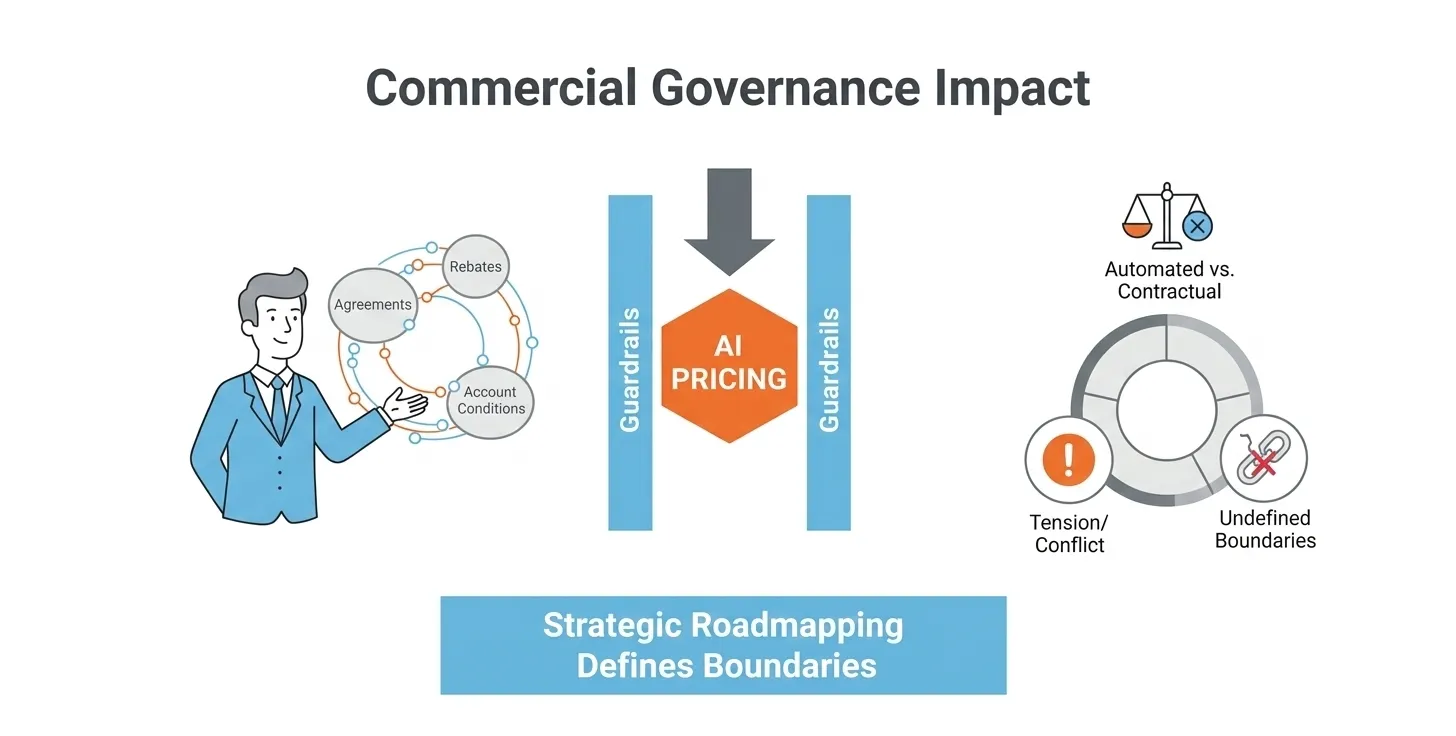
In negotiated B2B environments, pricing is structured around agreements, rebates, and account-specific conditions. Introducing intelligent pricing requires clarity around how far automation can operate within those commercial boundaries. If guardrails are not clearly defined, tension can emerge between automated recommendations and long-standing contractual expectations. Strategic roadmapping forces these boundaries to be made explicit before automation expands.
Operational Workflow Impact
AI-driven forecasting or order prioritization does not stay confined to dashboards. It influences procurement cycles, warehouse allocation, credit exposure, and service response times. When AI is introduced without roadmap alignment, cross-functional impact often appears late. Sales may question pricing logic. Finance may need additional oversight. Operations may experience downstream pressure. Strategic roadmapping brings these implications into view early. It ensures intelligent systems are evaluated not only for technical feasibility, but for operational fit.
Architectural Preconditions for Intelligent Systems
AI performance is closely tied to the reliability of the architecture beneath it.
Most B2B commerce ecosystems have evolved over years. ERP platforms are configured to support specific contract structures. CRM systems may differ by region. Pricing engines, PIM platforms, and fulfillment systems often developed independently, connected through a combination of standard APIs and custom integrations.
These environments can function effectively under traditional processes. AI, however, increases reliance on synchronized, consistent data flows.
Integration Stability
Intelligent systems assume dependable data exchange. If pricing updates are delayed between ERP and ecommerce, predictive outputs lose accuracy. If inventory synchronization is inconsistent, automated replenishment becomes difficult to trust.
Strategic roadmapping evaluates integration maturity early. It surfaces latency issues, reconciliation effort, and brittle custom logic before automation increases operational load.
System Ownership and Boundaries
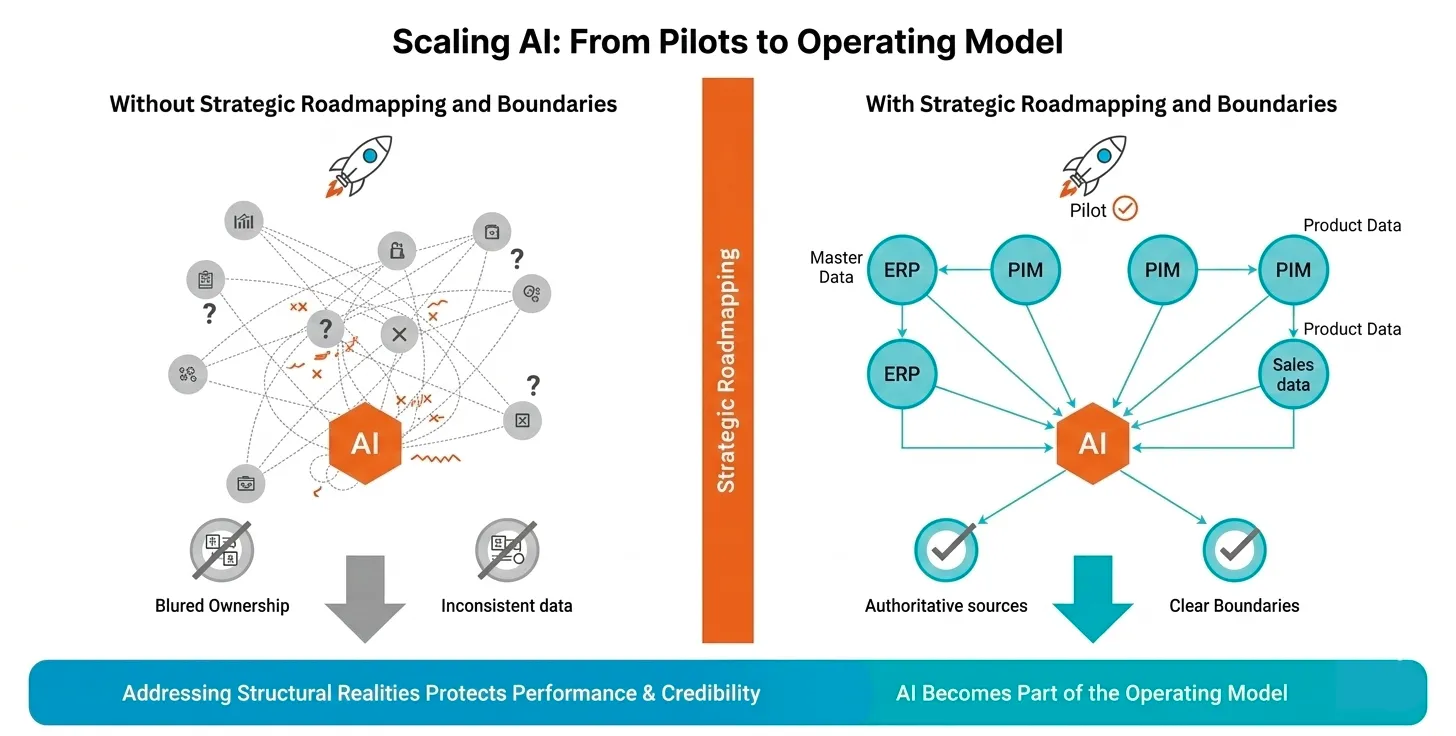
In mature ecosystems, ownership can blur. Pricing may exist in ERP, ecommerce, and spreadsheets maintained by sales teams. Product attributes may be partially managed in both ERP and PIM.
AI introduced into unclear ownership structures amplifies inconsistency. Roadmapping clarifies authoritative sources and system boundaries before intelligence is layered onto the environment.
Addressing these structural realities in advance protects both performance and credibility.
Data Governance as a Strategic Requirement
In B2B commerce, data complexity accumulates gradually. Contract-specific pricing overrides, regional catalog variations, negotiated discounts, and manual data corrections introduce subtle inconsistencies over time.
Under manual oversight, these inconsistencies may remain manageable. Under automation, they become more visible. AI systems operate within the data environment they inherit.
If product attributes are inconsistent across regions, recommendations will reflect that inconsistency. If pricing logic differs between systems, predictive outputs will vary accordingly.
Strategic roadmapping treats data governance as a strategic concern rather than a technical task. It clarifies:
• Authoritative ownership of product and pricing data
• Validation processes for contract logic
• Synchronization cadence across systems
• Escalation mechanisms for discrepancies
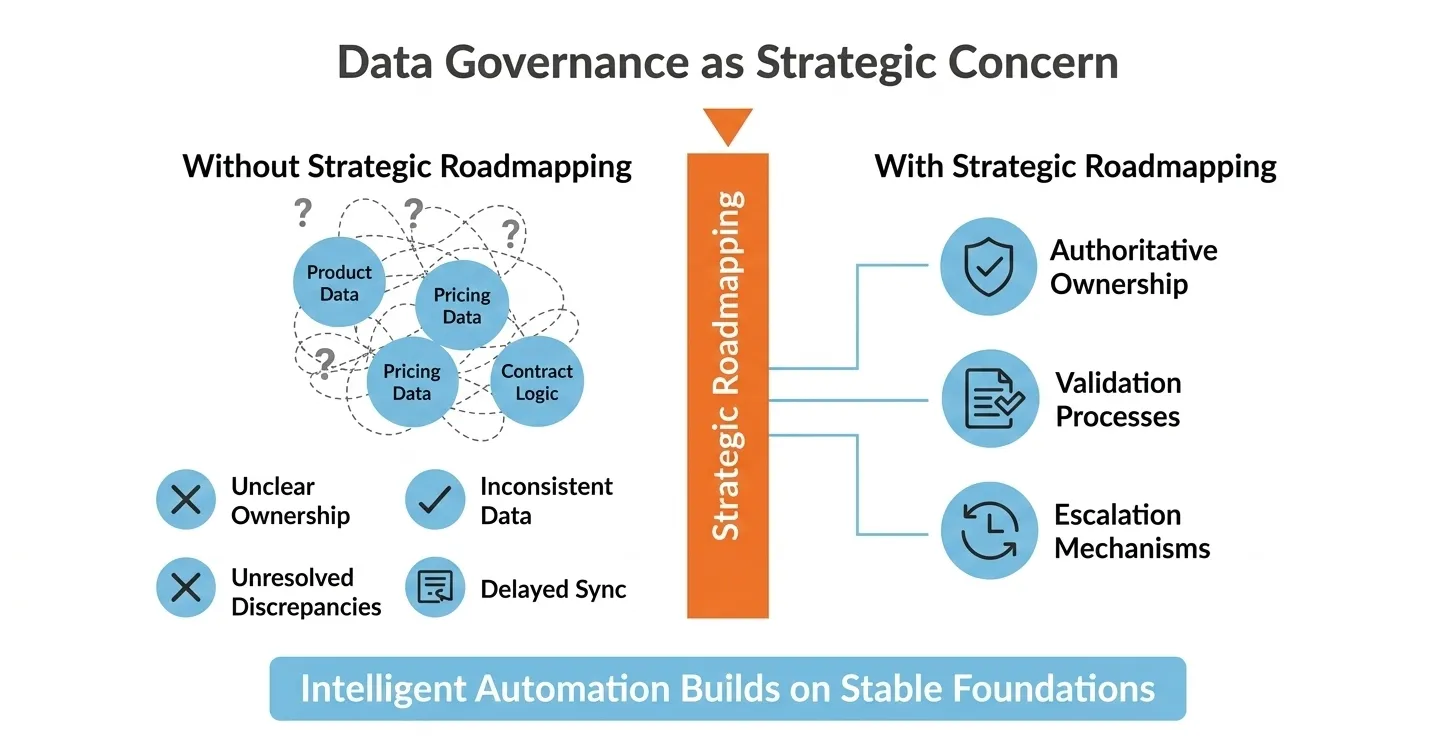
This groundwork ensures that intelligent automation builds on stable foundations rather than exposing unresolved misalignment.
Organizational Structure and Decision Accountability
AI influences how decisions are made. In B2B commerce, decision structures exist to protect margin, compliance, and operational continuity.
Approval thresholds, credit limits, and contract escalation paths are typically embedded within governance models. When AI begins generating pricing recommendations or operational signals, accountability does not disappear.it evolves.
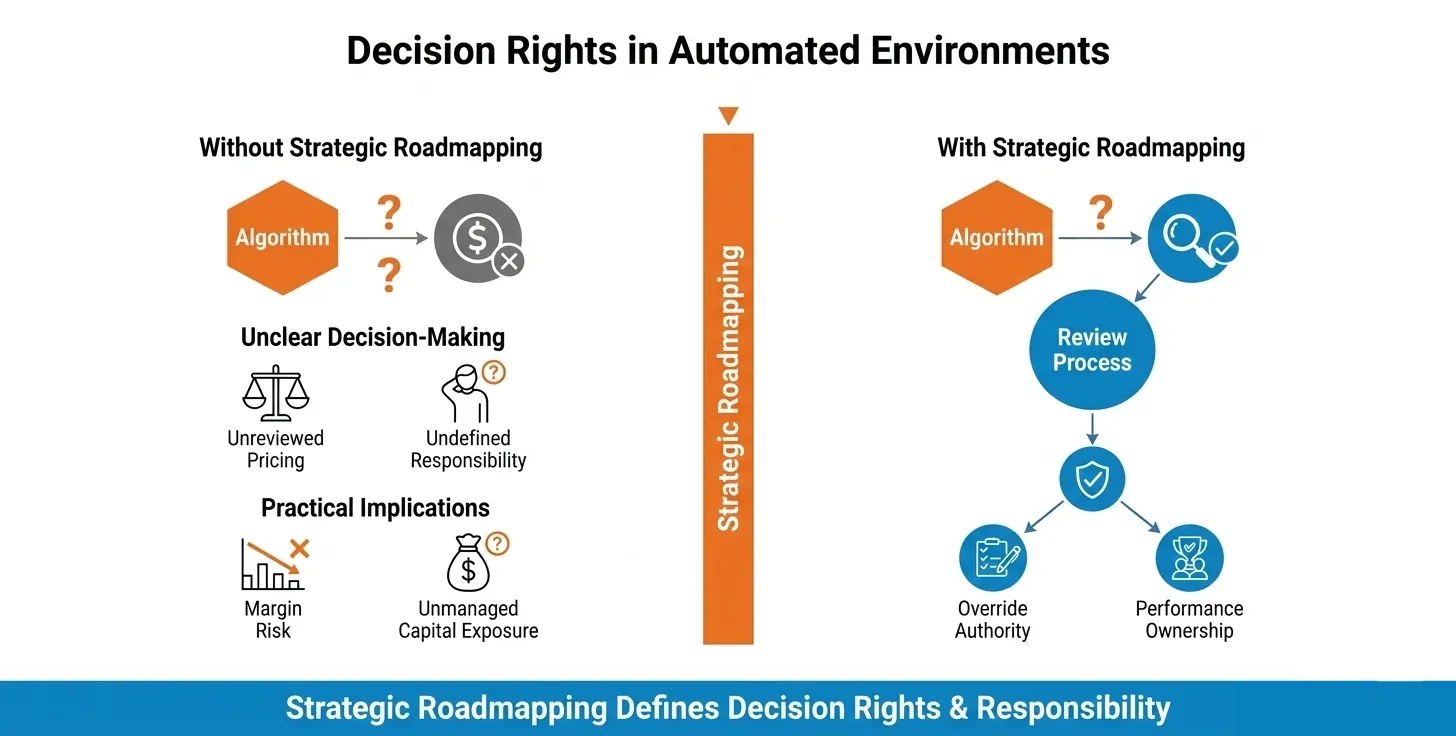
Decision Rights in Automated Environments
If an algorithm proposes pricing outside historical thresholds, who reviews it? If automated forecasting increases procurement exposure, who retains responsibility for outcomes?
These questions have practical implications. They affect margin protection and capital allocation.
Strategic roadmapping clarifies the boundaries of automation before deployment. It defines review processes, override authority, and performance ownership in advance.
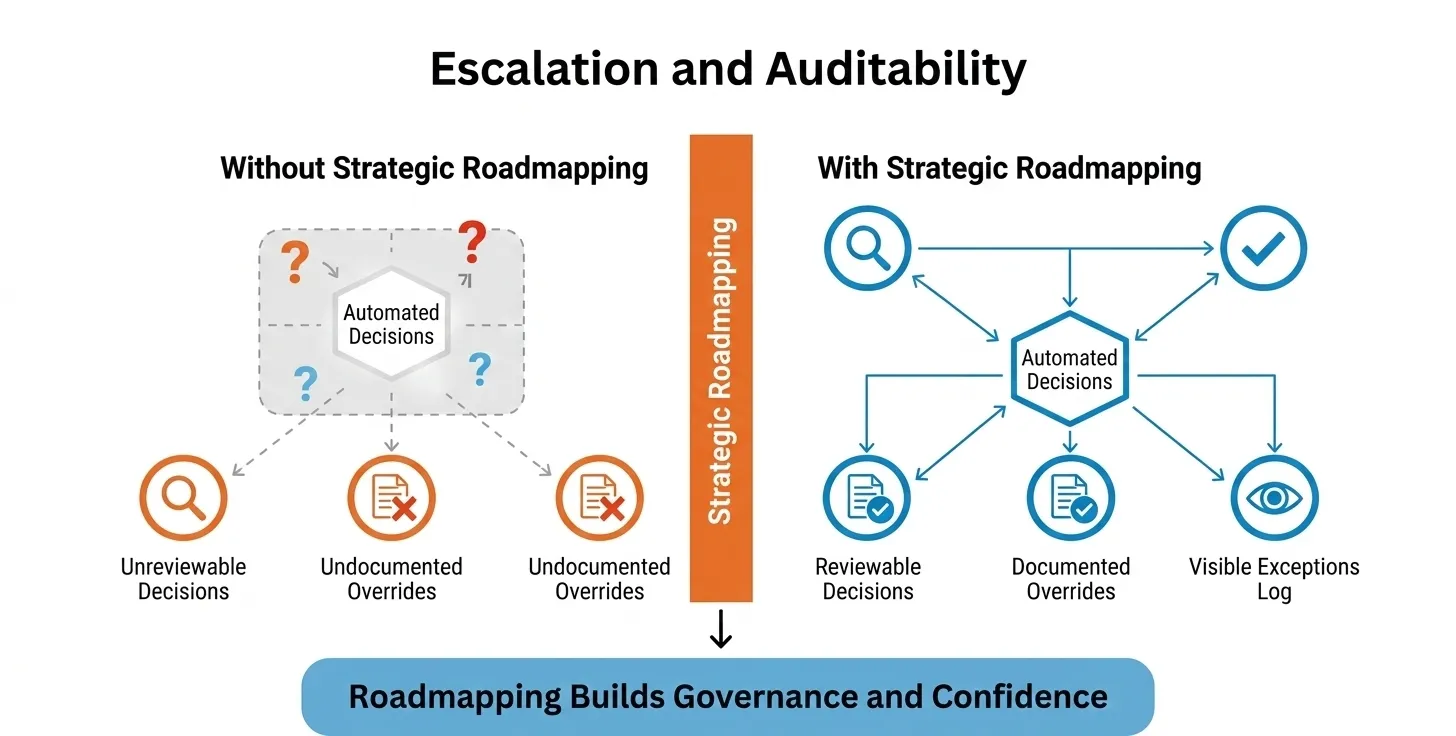
Escalation and Auditability
Enterprise B2B organizations require traceability. Automated decisions must be reviewable. Overrides must be documented. Exceptions must remain visible.
Roadmapping integrates these governance structures into phased implementation plans, reducing uncertainty and reinforcing confidence across functions.
Capability Development Versus Tool Deployment
AI features are increasingly embedded within commerce platforms. Activating them is rarely the hardest part.
Enterprise capability requires more than activation. It requires integration into daily workflows. Teams must understand how outputs are generated, how to interpret them, and how to respond.
Early pilots often demonstrate promising results. Scaling those results across regions or functions introduces additional complexity. Adoption slows when workflows remain unchanged or when performance metrics are not aligned with automated contribution.
Strategic roadmapping sequences adoption deliberately. It aligns system deployment with:
• Process redesign
• Training initiatives
• Governance reinforcement
• Performance monitoring
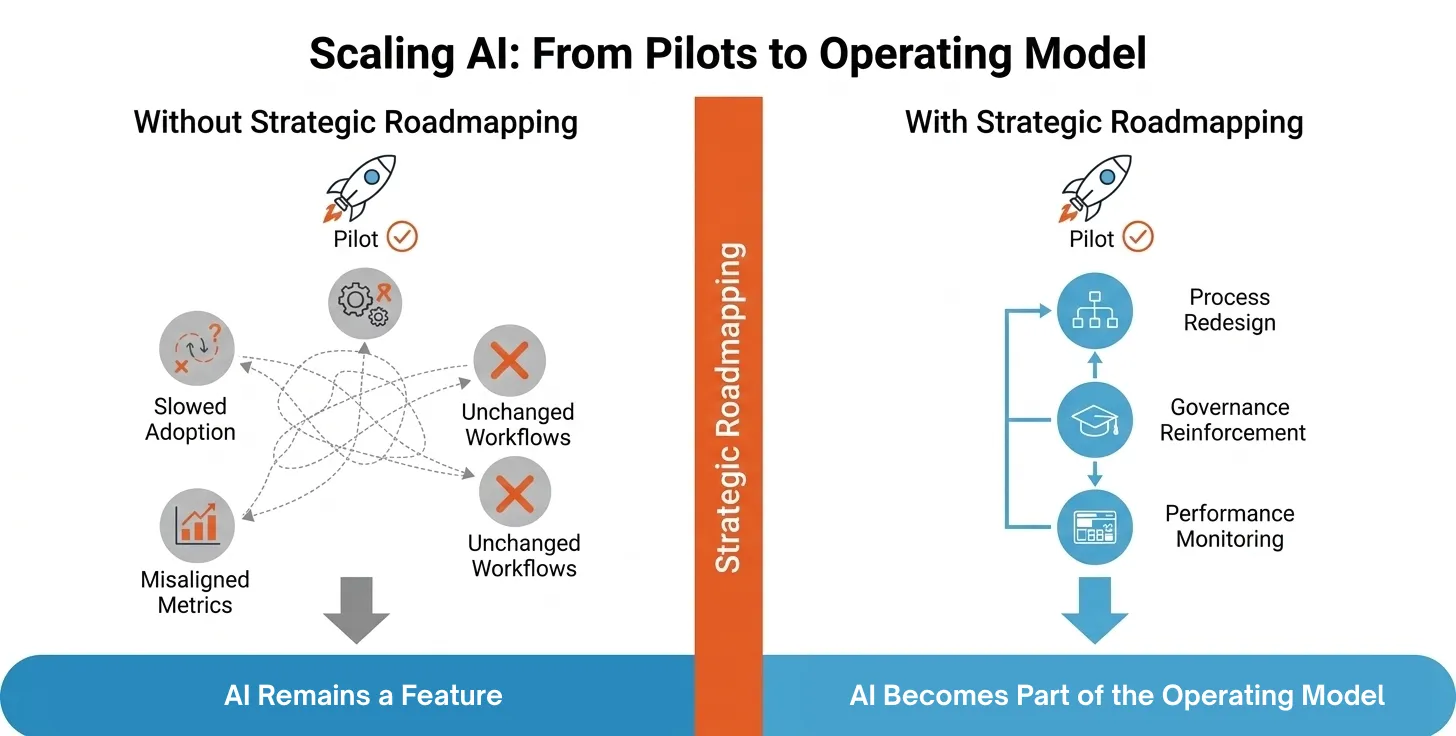
This progression ensures that AI becomes part of the operating model, not simply a feature within the technology stack.
Sequencing AI Within a Phased Commerce Strategy
In B2B commerce, transformation benefits from deliberate sequencing. Stability in core systems should precede integration harmonization. Integration maturity should precede broader automation. Advanced intelligence builds on proven reliability.
When organizations accelerate directly toward predictive or autonomous systems without reinforcing earlier stages, structural gaps often surface under scale.
Stabilization Before Automation
Foundational reliability, consistent pricing logic, synchronized inventory data, defined approval workflows must operate predictably before intelligent automation expands.
If instability exists at the foundation, automation magnifies it.
Phased Expansion
Strategic roadmapping places AI initiatives within a structured evolution. Intelligence may begin with focused use cases, extend into forecasting or dynamic pricing, and later support adaptive operational models.
This approach is not about slowing innovation. It is about ensuring innovation compounds rather than destabilizes.
Assessing Readiness for Scalable AI Adoption
Pilot programs provide insight, but they operate within controlled conditions. Enterprise readiness requires broader signals.
Structural Readiness Indicators
• Indicators of scalable readiness may include:
• Consistent pricing logic across channels
• Reliable integration performance under peak demand
• Clear ownership of automated decision outputs
• Standardized data definitions across regions
• Adoption metrics extending beyond early teams
These measures help determine whether automation can sustain enterprise scale.
Organizational Readiness
Beyond systems, readiness includes cultural and operational alignment. Teams must trust outputs. Leadership must understand how AI influences forecasting, margin management, and service performance.
Strategic roadmapping establishes measurable thresholds before expansion. It ties scaling decisions to observable maturity rather than momentum alone.
Strategic Roadmapping as an Alignment Framework for AI Investment
Artificial intelligence accelerates analysis and execution. In B2B commerce ecosystems, acceleration amplifies what already exists.
Where governance, integration, and data discipline are strong, automation improves precision and efficiency. Where fragmentation persists, complexity increases.
Strategic roadmapping provides the coordination layer that aligns AI ambition with operational reality. It integrates architectural preparation, governance clarity, capability development, and sequencing discipline into a coherent progression.
AI in B2B commerce is not simply an added capability. It extends the operating model itself. The effectiveness of that extension depends on structural alignment.
In complex B2B environments, intelligence delivers sustainable value when introduced deliberately. Strategic roadmapping ensures that introduction strengthens the organization rather than stretching it.
The Current State of AI Adoption in B2B Commerce
The Expanding Scope of AI in B2B Operating Models
Architectural Preconditions for Intelligent Systems
Data Governance as a Strategic Requirement
Organizational Structure and Decision Accountability
Capability Development Versus Tool Deployment
Sequencing AI Within a Phased Commerce Strategy
Assessing Readiness for Scalable AI Adoption
Strategic Roadmapping as an Alignment Framework for AI Investment
Subscribe to learn more about content
Stay informed and never miss out on valuable insights. Subscribe today to access in-depth content, updates, and exclusive resources tailored just for you!