Revolutionizing UX: Advanced Search and Navigation for Modern Websites

Introduction
Search and navigation are fundamental components of the modern web user experience, playing a crucial role in helping users effortlessly find relevant content and navigate complex websites. As websites grow in size and complexity, effective search and navigation systems become essential for ensuring user satisfaction, reducing bounce rates, and increasing engagement.
Advanced search and navigation features are transforming how users interact with websites by leveraging cutting-edge technologies like artificial intelligence and machine learning. These innovations enable more intuitive, personalized, and efficient user experiences, allowing visitors to quickly locate information, discover new content, and complete tasks with ease. From AI-powered contextual search to dynamic faceted navigation, these advancements are reshaping the digital landscape and setting new standards for usability and conversion optimization
AI-Powered Search
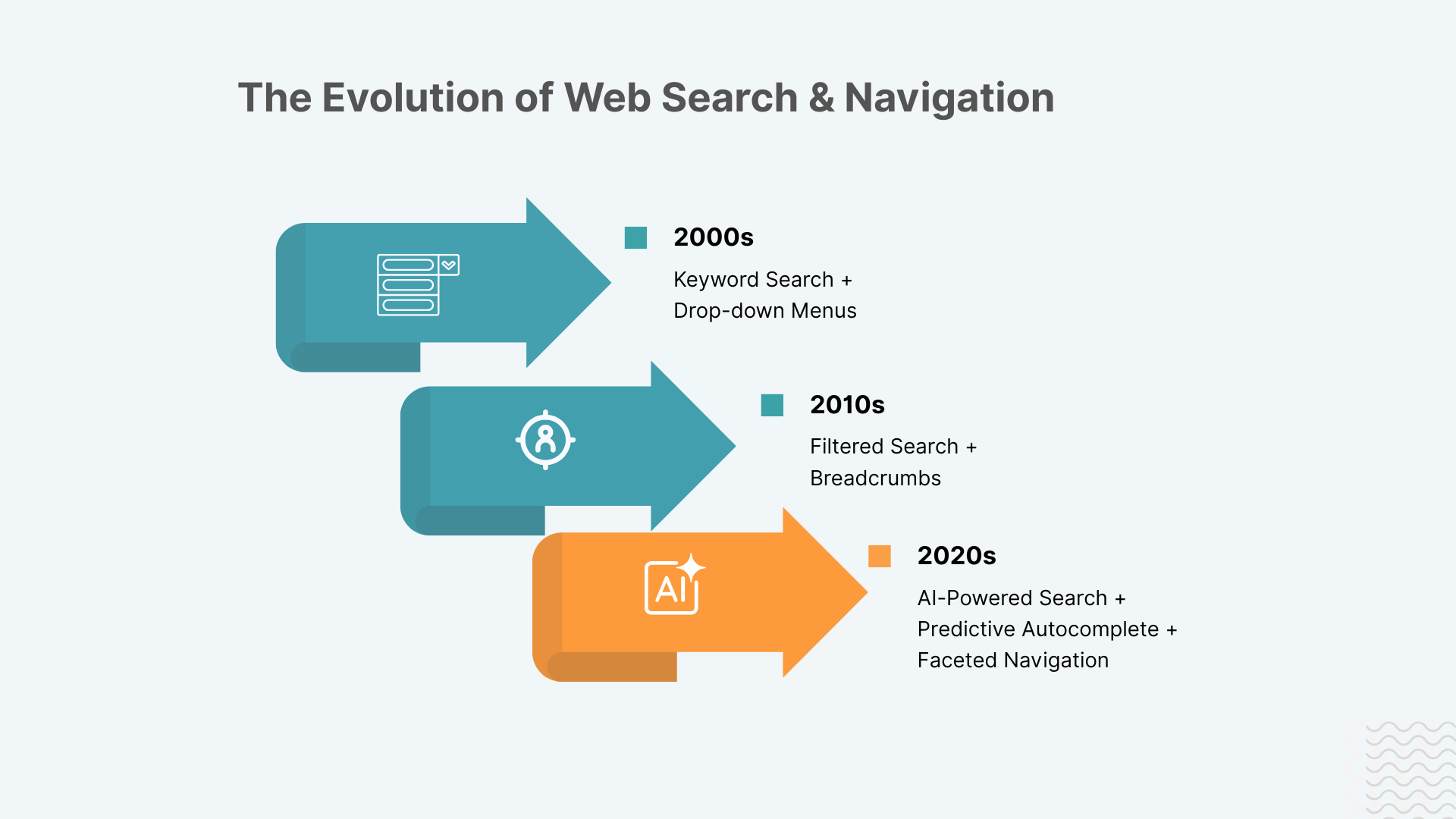
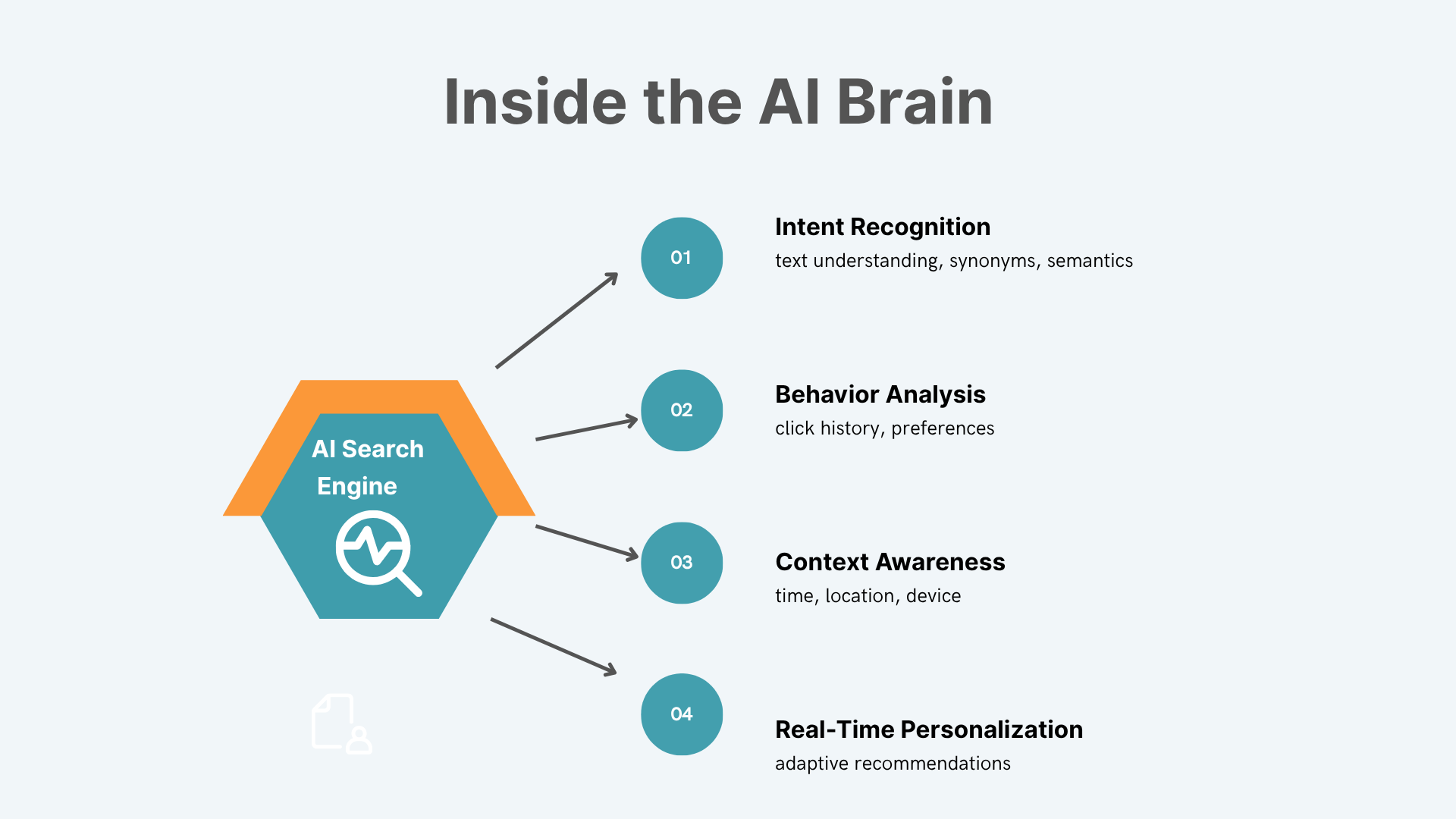
AI-powered search leverages artificial intelligence and machine learning algorithms to enhance the search functionality on websites. These technologies analyze vast amounts of data to understand the context and intent behind user queries, enabling the delivery of more accurate and relevant results.
By interpreting user behavior and preferences, AI-driven search can provide contextual and intent-based search results that go beyond simple keyword matching. This means users receive results that better align with their needs, improving the overall search experience.
Examples of personalized search experiences include e-commerce platforms suggesting products based on past purchases or browsing history, content websites tailoring article recommendations to individual interests, and dynamic search results that adapt in real-time as users refine their queries. These personalized features not only enhance user satisfaction but also drive higher engagement and conversion rates.
Search Autocomplete & Suggestions
Autocomplete is a powerful search feature that significantly improves search efficiency by predicting and displaying potential search terms as users begin typing in the search bar. This functionality allows users to quickly select relevant search terms without needing to type the entire query, thereby reducing effort and speeding up the search process.
One of the key roles of autocomplete is to minimize spelling errors, which are common when users input search queries, especially on mobile devices. By offering real-time suggestions, autocomplete helps ensure users receive accurate results, enhancing the overall search experience and reducing frustration caused by irrelevant or no results.
Additionally, autocomplete provides valuable insights into user search behavior. By analyzing the search terms users frequently enter and the suggestions they select, website owners can better understand user intent and preferences. This data can be used to refine search algorithms, optimize content, and improve site navigation, ultimately enhancing user satisfaction and increasing conversions.
Dynamic faceted navigation is a powerful feature that allows users to filter and refine search results or product listings based on multiple attributes such as category, price, brand, color, size, and more. Faceted filters update in real-time, instantly reflecting changes as users select or deselect filter options. This interactive search interface provides a user-friendly way to narrow down large volumes of content or products, enabling visitors to find exactly what they are looking for quickly and efficiently.
The impact of dynamic faceted navigation on user engagement and conversion rates is significant. By empowering users to customize their browsing experience, it reduces frustration and search time, leading to higher satisfaction and increased likelihood of completing desired actions such as making a purchase or submitting inquiries. Particularly on e-commerce websites, faceted navigation helps guide users through primary categories and essential pages, improving navigation elements that contribute to a seamless user experience and ultimately driving higher conversions.
From an SEO perspective, managing filtered URLs generated by faceted navigation is critical. Improper handling can lead to duplicate content issues and dilute page authority. Best practices include implementing canonical tags to point filtered pages to their main category, using robots.txt to block crawling of certain filter combinations, and ensuring URLs are clean and descriptive. Proper SEO considerations help maintain the website's content integrity while still enabling efficient site search functionality through faceted navigation filters.
Integrating advanced search and navigation features creates a seamless user experience by combining the strengths of both functionalities. When search and navigation work together harmoniously, users can effortlessly locate specific content through the search box while also exploring related categories via intuitive navigation menus. This integration ensures that users with varying preferences—whether they want to search directly or browse—can find what they need quickly and efficiently.
The synergy between advanced search functions, such as AI-powered autocomplete and dynamic faceted navigation, and well-structured navigation elements like breadcrumb trails and clear main menus, enhances user satisfaction and engagement. This cohesive experience reduces bounce rates and encourages longer site visits, ultimately driving higher conversion rates.
From a business perspective, adopting integrated search and navigation technologies offers a competitive advantage by meeting modern user expectations for fast, relevant, and personalized interactions. It supports better decision-making through data insights gathered from search queries and navigation patterns, enabling continuous improvement of the website's content and structure. Consequently, businesses can achieve improved user retention, increased sales, and stronger brand loyalty by prioritizing this seamless search and navigation experience.
The Importance of Internal Site Search
Internal site search plays a critical role in enhancing user experience, particularly on large or content-rich websites. As websites grow in size and complexity, navigating through multiple pages to find specific information can become overwhelming and time-consuming for users. An efficient site search allows visitors to enter keywords directly into a search box, swiftly retrieving relevant results without the need to browse through extensive menus or multiple pages. Key benefits of internal site search include:
• Enables users to quickly find specific content or products by entering keywords.
• Reduces the time and effort spent navigating through multiple pages.
• Provides accurate and relevant search results, enhancing user satisfaction.
• Complements website navigation by catering to different user preferences.
• Helps lower bounce rates by keeping users engaged and on the site longer.
• Drives higher conversion rates by facilitating faster access to desired items.
This functionality is especially vital for e-commerce sites and content-heavy platforms, where users often have precise goals and expect quick access to specific items or information. In summary, internal site search is indispensable for modern websites aiming to provide a positive user experience, enabling visitors to efficiently locate relevant content and navigate complex website structures with ease.
1. Irrelevant search results
Search functions may fail to understand user intent or return unrelated content due to limited algorithms, lack of synonym recognition, or poor handling of spelling errors and typos, causing user frustration.
2. Confusing or cluttered menus
Overly complex navigation structures, unclear labels, or hidden elements like hamburger menus without proper cues can overwhelm and disorient users.
3. Fragmented user journey
When both search and navigation fail, users struggle to locate relevant content or complete desired actions, leading to higher bounce rates.
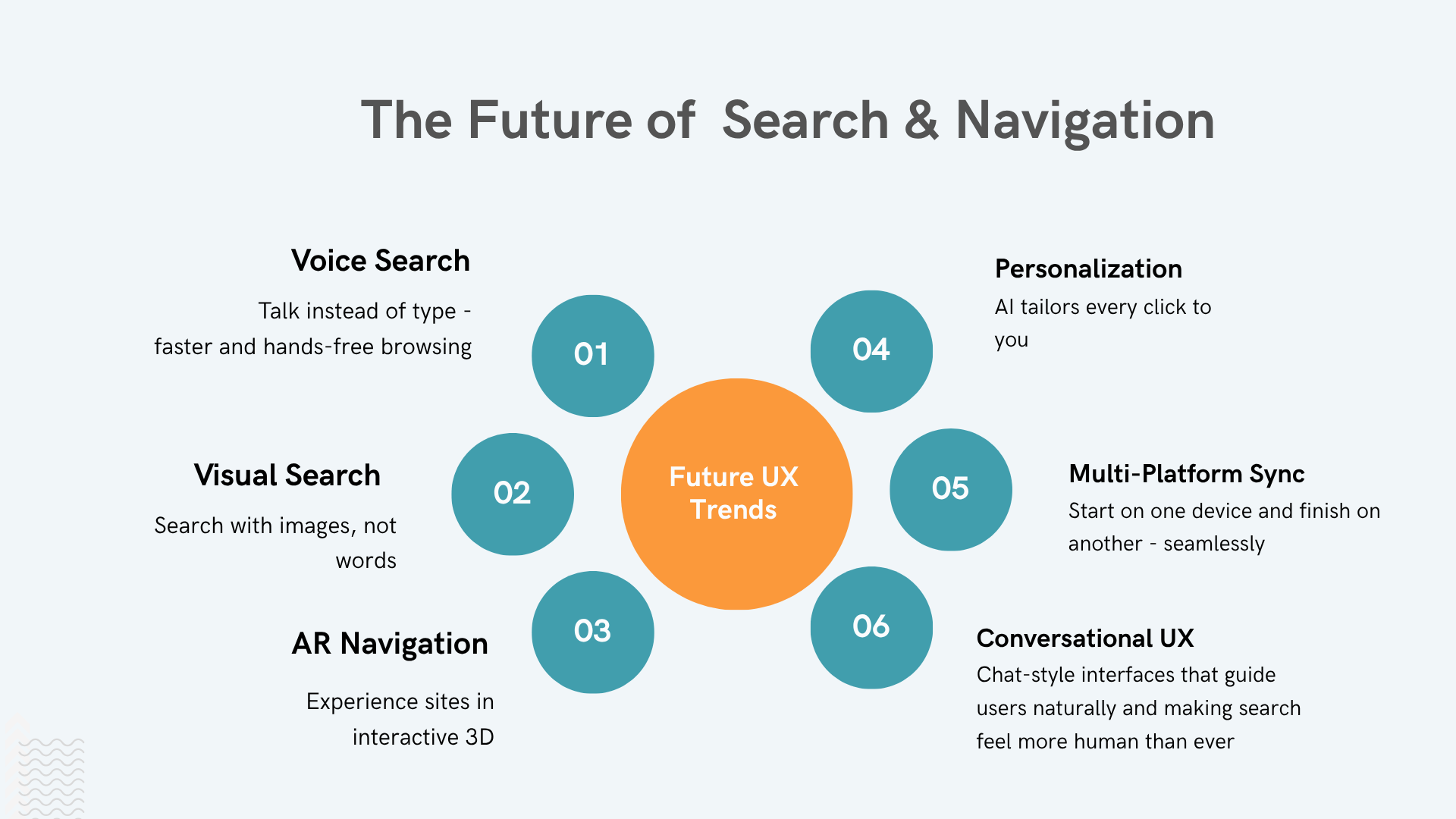
As technology rapidly advances, several emerging trends are poised to reshape site search and navigation, making user experiences more seamless, personalized, and efficient.
1. Voice Search
Increasingly popular on mobile devices and smart speakers, voice search enables users to interact with websites through natural language queries. This hands-free approach enhances accessibility and speeds up the search process, especially for users on the go.
2. Visual Search
By allowing users to search using images instead of text, visual search technology improves product discovery and content retrieval. Users can upload photos or use their device cameras to find visually similar items or related information, which is particularly valuable in e-commerce and creative industries.
3. Personalization
Leveraging AI and machine learning, personalization tailors search results and navigation menus based on individual user behavior, preferences, and past interactions. This leads to more relevant content suggestions, increased engagement, and higher conversion rates.
4. Contextual and Semantic Search
Future search engines will better understand the context and intent behind queries, moving beyond simple keyword matching to deliver more accurate and meaningful results. Multi-Platform Integration: Search and navigation features will seamlessly integrate across devices and platforms, enabling users to maintain a consistent experience whether they access a site via desktop, mobile, or other connected devices.
5. Augmented Reality (AR) Navigation
AR technologies may soon enhance website navigation by overlaying interactive elements in real-world environments, offering immersive ways to explore products or information. These innovations collectively promise to elevate site navigation and search functionality, ensuring users can effortlessly find relevant content while enjoying a highly intuitive and personalized browsing experience.
Conclusion
Advanced search and navigation features play a critical role in revolutionizing the modern website's structure by enhancing user experience and streamlining content discovery. AI-powered search, autocomplete suggestions, and dynamic faceted navigation empower users to find relevant content quickly and efficiently, while intuitive navigation elements guide users through the website’s hierarchy with ease. Together, these technologies reduce bounce rates, increase engagement, and drive higher conversion rates.
To stay competitive and meet the evolving expectations of site search users, businesses must prioritize integrating these advanced search and navigation solutions. By adopting cutting-edge technologies and focusing on seamless, personalized interactions, websites can provide users with a positive user experience that fosters loyalty, boosts satisfaction, and ultimately leads to greater success in the digital landscape
Subscribe to learn more about content
Stay informed and never miss out on valuable insights. Subscribe today to access in-depth content, updates, and exclusive resources tailored just for you!