Single Source of Truth for AI: Why ERP–Ecommerce Integration Decides Your AI ROI

Picture this: your ecommerce site says an item is in stock. Your ERP shows it's already been allocated to a different order. Your pricing tool quietly updated a discount three days ago, but the storefront never got the memo.
None of this is new — teams have lived with these small contradictions for years, patched over with manual checks and a little institutional memory. But plug AI into that same environment — an agent that routes orders, a copilot that drafts quotes, a chatbot answering customer questions — and the patching stops working. The AI doesn't know which version of "true" to trust. It just acts on whatever it's given, contradictions and all.
That's the real reason most AI projects in commerce underperform. It's rarely the model. It's that nobody decided, in explicit terms, which system gets to be the source of truth for each piece of data.
In B2B ecommerce, retail, and complex distribution (healthcare especially), that question touches inventory, pricing, orders, and customer accounts. Until it's answered, no amount of machine learning sophistication will close the gap between an AI pilot and something that actually earns its budget back.
What "AI-Ready Data" Actually Means
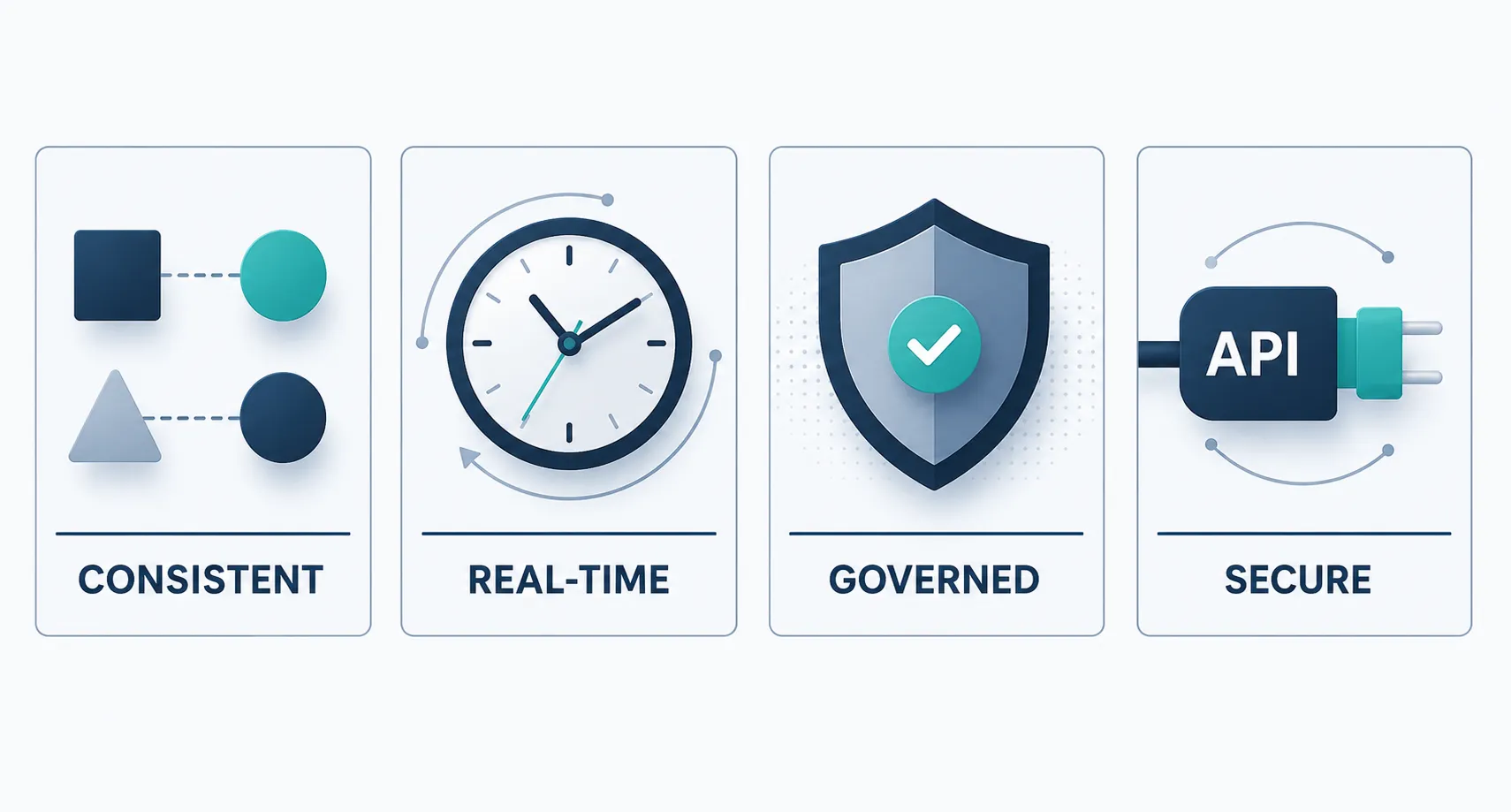
"Clean data" sitting in a warehouse isn't the same thing as AI-ready data. For AI systems making live, operational decisions, data needs to clear four bars:
- Consistent across systems: the same definitions and values in your ERP, ecommerce platform, CRM, and WMS, not four slightly different versions of the truth.
- Available in near real time: low enough latency that an agent acting on it isn't working from information that's already stale.
- Governed with clear ownership: someone can point to exactly which system owns a given piece of data, and why.
- Accessible via secure APIs: queryable and actionable by AI systems, not locked behind manual exports and CSV hand-offs.
Put simply: it comes down to deciding which system is authoritative for each domain, then building everything else to consume from it — instead of letting every application quietly maintain its own version of reality.
Why AI Makes a Single Source of Truth Non-Negotiable
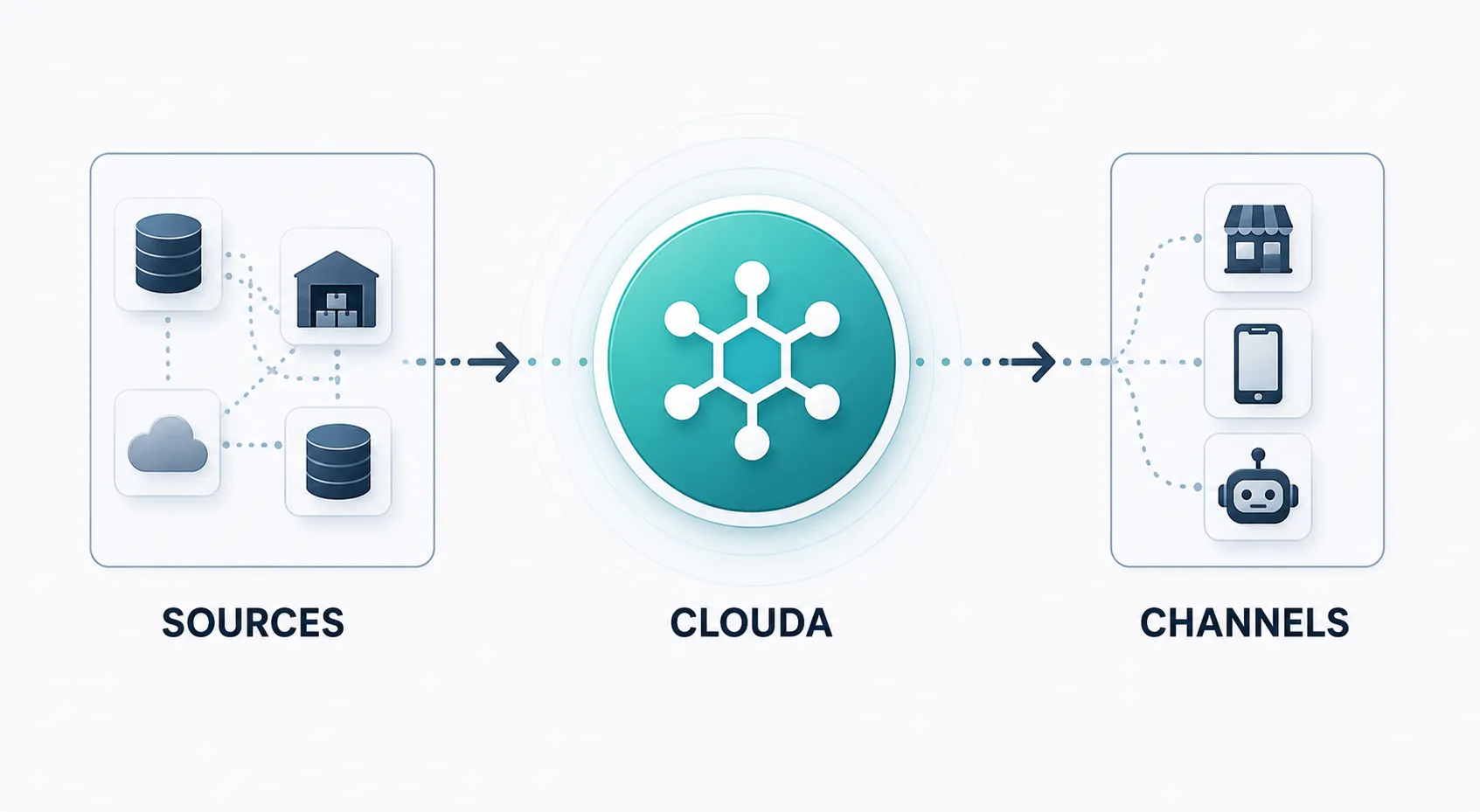
A single source of truth (SSOT) is just the one system that's allowed to be right for a given domain. In most commerce stacks, that breaks down roughly like this:
- Inventory truth lives in your ERP or WMS.
- Price and discount truth lives in a pricing engine or your ERP.
- Order lifecycle truth lives in your ERP or OMS.
- Customer contract truth lives in your CRM or ERP.
Every other system — the storefront, marketplace listings, B2B portals, and any AI agent touching them — should be reading from that source, not inventing a local copy of it.
How it should flow: Systems of record (ERP/WMS for stock, a pricing engine for price, CRM for contracts) feed into a central integration layer — this is where Clouda.io sits — which exposes clean, monitored APIs outward to every consuming channel: ecommerce, marketplaces, customer portals, and AI agents alike.
Skip that middle layer, and three things go wrong:
- Training data gets noisy. Models learn from contradictions instead of how the business actually operates.
- Live decisions go sideways. Agents act on cached or partial data, which is how you end up overselling stock or quoting the wrong price.
- ROI becomes unmeasurable. You can't prove AI impact when every system tells a different version of what happened.
Enterprise AI initiatives tend to stall for this exact reason — not because the model was weak, but because the data underneath it was never unified. Fixing that is the real prerequisite for getting AI out of pilot mode.
 It's Rarely the Model
Most AI projects in commerce underperform not because the model is weak, but because nobody decided, in explicit terms, which system gets to be the source of truth.
The ERP–Ecommerce Integration Problem Is Now an AI Problem
Most B2B and retail organizations aren't running one clean system — they're running a dozen loosely connected ones: an ERP for financials and supply chain, an ecommerce platform for digital sales, a CRM for pipeline, a WMS for fulfillment, and inevitably a few spreadsheets holding the gaps together. Each one keeps its own slightly-different version of the same facts, which shows up as:
- Stock levels that don't match across sales channels
- Conflicting prices, tiers, and promotions
- Order records that are duplicated, missing, or out of sync
This used to mean reconciliation headaches and manual fixes — annoying, but survivable. AI removes the safety margin. An automated order-routing agent or a recommendation engine doesn't pause to sanity-check a number the way a person would; it just amplifies whatever it's given, at scale and at speed.
Where the Stakes Are Highest: B2B Commerce and Healthcare Distribution
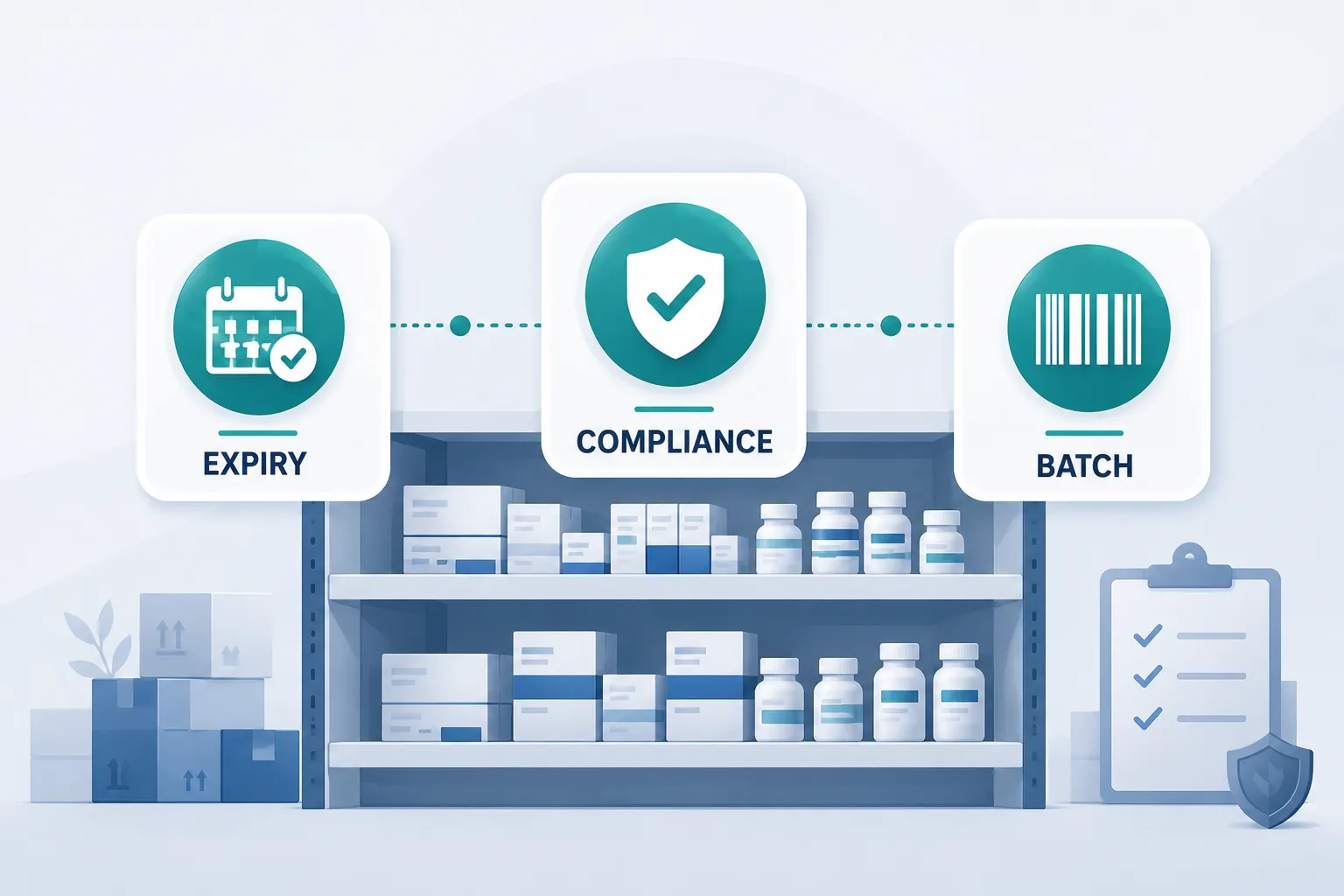
In regulated environments like healthcare distribution, misaligned data isn't just a customer-experience problem — it's a compliance one. Batch numbers, expiration dates, contract pricing, and licensing all need to stay in sync across platforms. An AI agent working off outdated inventory or account entitlements can trigger a non-compliant shipment, and that's a very different kind of expensive.
Four Domains Where "Truth" Needs to Be Explicit
To get a stack genuinely ready for AI, four domains need an assigned owner:
1. Inventory & Stock Allocations
Pick a master system — usually ERP or WMS — for physical stock, safety buffers, and allocations. Every channel (ecommerce, marketplaces, portals) should pull from it directly, with no local spreadsheets or manual exports filling the gaps.
2. Pricing & Discount Architecture
Decide whether your ERP, a CPQ tool, or a dedicated pricing engine owns base rates, customer-specific pricing, tiers, and promotions. Quote-generating copilots and search/recommendation tools need to call this source live, not work off a cached snapshot.
3. Order Lifecycle & Fulfillment Status
Name the official owner of order state — ERP, OMS, or a central order hub. Customer-facing AI assistants should pull live status from that hub directly, so the storefront and the warehouse are never telling the customer two different stories.
4. Customer Accounts & Contract Entitlements
Choose one master — typically CRM or ERP — for account hierarchies, credit limits, contract terms, and permissions. AI sales assistants should verify entitlements at the source instead of guessing based on a storefront login.
Data Governance: Who Actually Owns the Truth?
Naming a source of truth is a governance decision as much as a technical one. It requires answering:
- Domain ownership: who has final say over which system is the record for a given dataset?
- Data stewardship: who monitors quality and manages schema changes over time?
- Exception handling: how are manual overrides, emergency holds, or backdated contract changes managed without breaking the model?
Skip this step, and even the best integration platform will drift back toward disconnected spreadsheets and brittle point-to-point connections within a year or two.
Checklist: Is Your Commerce Stack Actually Ready for AI?
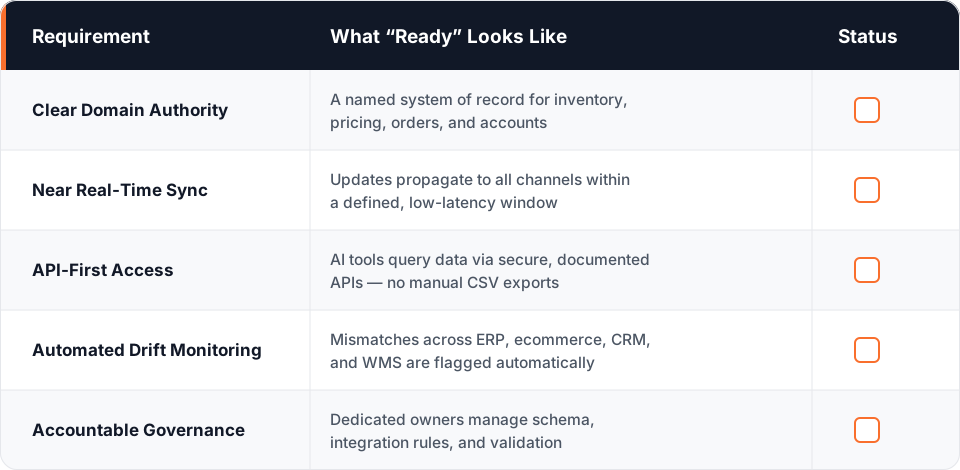
If you can't check off inventory, pricing, and order lifecycle, your stack isn't AI-ready yet — regardless of how many pilots are currently running.
How Clouda.io Builds the Data Fabric Underneath It All
Clouda.io is the integration layer that turns a single-source-of-truth strategy into something that runs automatically, every day, without someone babysitting it.
Instead of wiring every system directly to every other system — the classic point-to-point mess that gets worse with each new tool you add — Clouda.io sits in the middle as one centralized layer, built to unify the stack incrementally and safely.
It does three things:
- Centralized API layer: exposes authoritative data from ERPs (SAP, NetSuite, Microsoft Dynamics), ecommerce platforms (Magento, Shopify, BigCommerce), CRMs, and WMS through a single, reliable set of APIs.
- Automated sync and drift control: enforces the right sync direction for each data type and flags discrepancies before they hit a downstream system.
- A trusted foundation for agentic AI: gives order-routing bots, pricing engines, and support copilots one verified view of what's actually true, instead of a patchwork of assumptions.
The result is a stack that doesn't just support today's AI pilot — it holds up as you add the next one, and the one after that.
Frequently Asked Questions
What is AI-ready data in B2B ecommerce?
Operational data that's synchronized across ERP, ecommerce, CRM, and warehouse systems, available in near real time, governed by clear ownership, and exposed through secure APIs — so AI systems can make decisions like pricing, order routing, and inventory allocation based on facts everyone agrees on.
Why does ERP–ecommerce integration matter for AI ROI?
Because it determines whether your AI agents and analytics tools see the same operational reality as your fulfillment and finance teams. Without integration around a single source of truth, AI learns from conflicting inputs — which shows up as overselling, pricing errors, and AI ROI that never quite materializes.
What is a single source of truth (SSOT) in software architecture?
The one system designated as authoritative for a specific domain — inventory or contracts, for example — with every other application reading from it rather than keeping a competing local copy.
Can AI fix or bypass disconnected backend systems?
No. AI doesn't repair bad data underneath it — it just acts on whatever it's given, faster and at greater scale. Feed it disconnected, inconsistent data, and it produces inaccurate results with more confidence, not less.
The Bottom Line
AI doesn't create truth — it acts on whatever truth you hand it. For most B2B ecommerce, retail, and distribution stacks, the difference between an AI pilot that stalls and one that pays for itself comes down to a single, unglamorous decision: which system is authoritative for each domain, and does everything else read from it? Get that foundation right, and every AI initiative you add on top gets more reliable, more measurable, and easier to trust.
What "AI-Ready Data" Actually Means
Why AI Makes a Single Source of Truth Non-Negotiable
The ERP–Ecommerce Integration Problem Is Now an AI Problem
Where the Stakes Are Highest: B2B Commerce and Healthcare Distribution
Four Domains Where "Truth" Needs to Be Explicit
Data Governance: Who Actually Owns the Truth?
Checklist: Is Your Commerce Stack Actually Ready for AI?
How Clouda.io Builds the Data Fabric Underneath It All
Frequently Asked Questions
The Bottom Line
Identify and Execute AI Opportunities With Clouda
Fill out the form and schedule a session with our team to assess your operations and identify where AI can create real impact.
Learn how our seven-stage engagement framework turns AI opportunities into practical, measurable business outcomes.
Fill out the form and schedule a session with our team to assess your operations and identify where AI can create real impact.
Learn how our seven-stage engagement framework turns AI opportunities into practical, measurable business outcomes.