Unlocking Ecommerce efficiency: the role of ERP integration
By Nirmal Darshan|
NOV 03 ,2025|10 Minutes
Share with others
Introduction
Running an ecommerce business without integrated systems often leads to siloed operations, where disconnected platforms cause inefficiencies, data inaccuracies, and slow decision-making. These challenges can hinder growth, create data silos, and increase manual work, making it difficult to keep up with customer demands and market competition.
Enterprise Resource Planning (ERP) integration in the context of ecommerce refers to connecting your ecommerce platform with a comprehensive ERP system to enable seamless data flow and automation across various business processes. This integration streamlines operations such as inventory management, order processing, financial reporting, and customer relationship management, eliminating manual data entry and reducing errors.
In this article, we will explore the critical role of ERP system integration in unlocking ecommerce efficiency. We will cover the key benefits of integrating ERP and ecommerce systems, including improved inventory management, enhanced customer satisfaction, streamlined processes, and better financial management. Additionally, we will discuss common challenges and best practices to ensure successful ERP implementation for ecommerce companies looking to scale and optimize their business operations.
Why ERP Integration Matters for eCommerce Growth
Integrating an ERP system with your ecommerce platform is a game-changer for any online business aiming to scale efficiently and stay competitive. ERP integration streamlines operations by connecting various business functions, enabling seamless data flow and automating key processes. This integration not only reduces manual data entry and human error but also improves overall operational efficiency, leading to significant business growth. Below are the critical reasons why ERP integration is vital for ecommerce expansion:
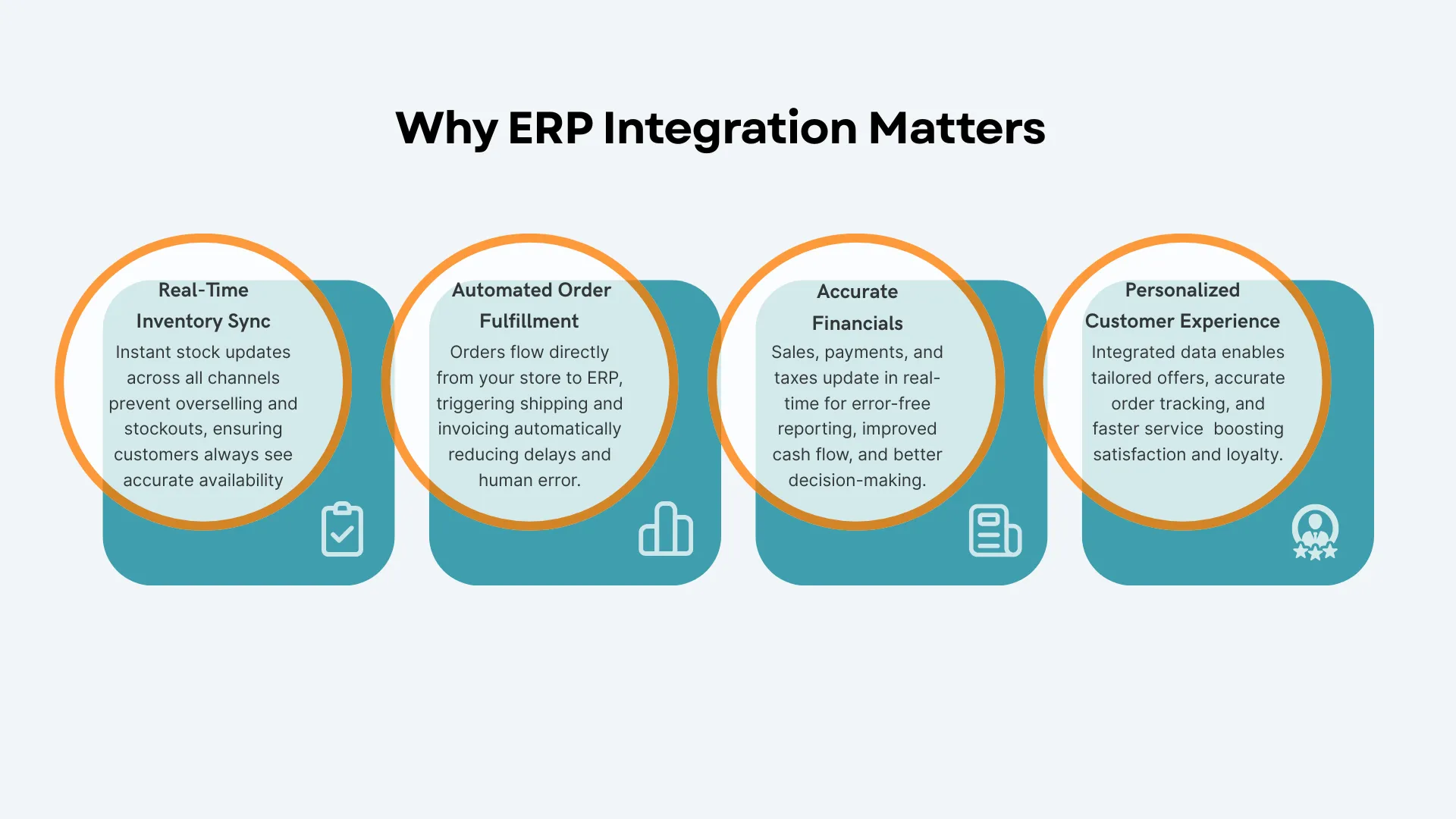
Real-Time Inventory Synchronization
ERP integration updates inventory instantly across all channels, preventing overselling and stockouts while enhancing supply chain management.
Faster Order Fulfillment
Automated order processing speeds up fulfillment by updating inventory and triggering shipping, improving customer experience.
Accurate Financial Reporting
Integration consolidates financial data, reduces errors, and provides real-time insights for better cash flow and decision-making.
Better Customer Experience
Syncing customer data enables personalized promotions and transparent order tracking, boosting satisfaction and loyalty.
Scalable Operations
ERP automation reduces manual tasks, allowing ecommerce businesses to efficiently handle growing order volumes and support growth.
ERP integration in eCommerce is the process of connecting your enterprise resource planning (ERP) system with your online store or ecommerce platform to enable seamless data exchange and automation of key business processes. This integration helps streamline operations such as order management, inventory tracking, financial reporting, and customer relationship management (CRM), reducing manual work and improving overall efficiency.
Typical systems involved include:
✓
Order Management: Automates order processing from purchase to delivery.
✓
Inventory Management: Provides real-time stock updates across all sales channels.
✓
Finance: Synchronizes invoicing, payments, and financial reporting.
B2B Benefits
B2C Benefits
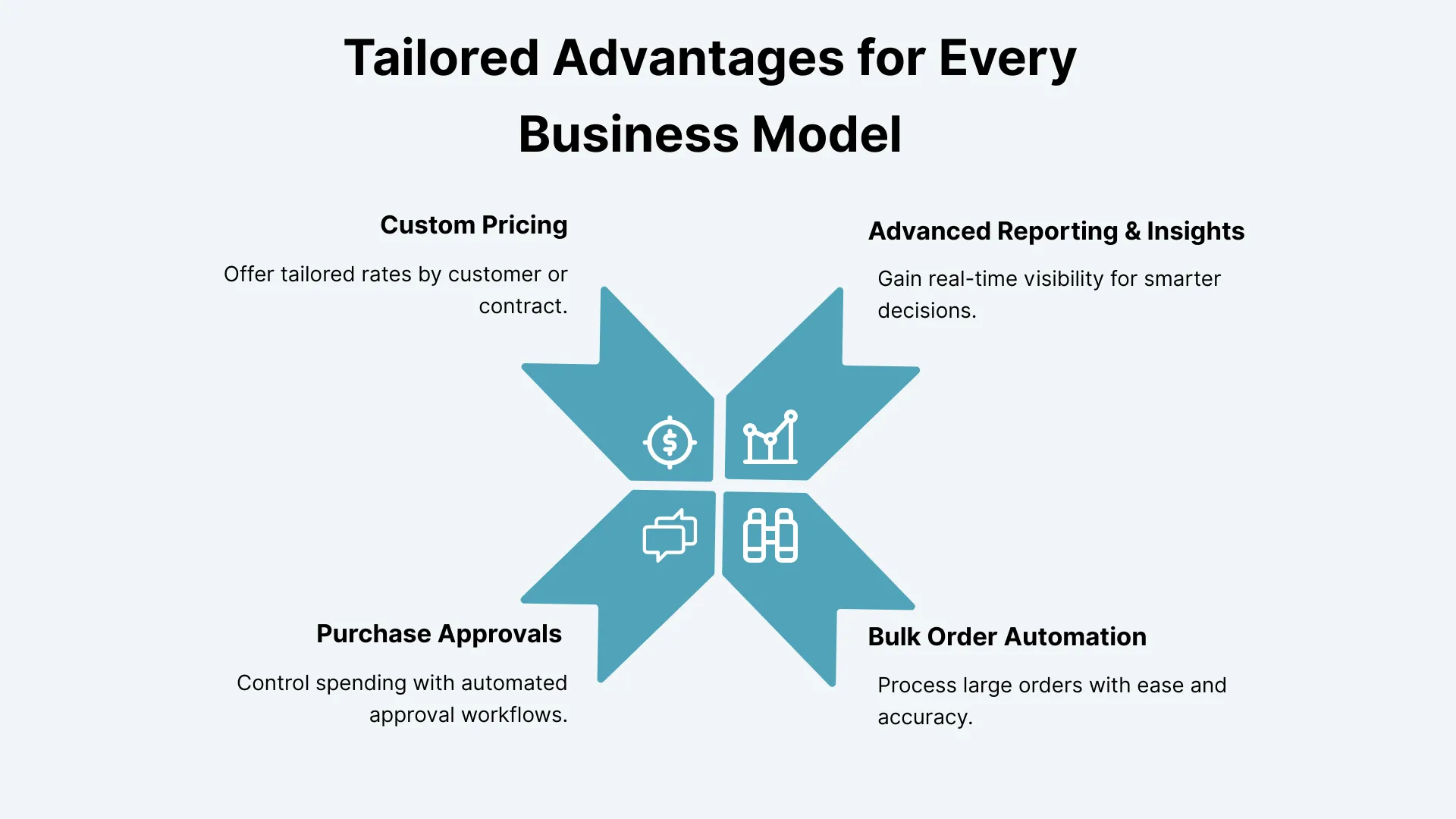
Custom Pricing: ERP integration allows businesses to offer tailored pricing based on customer profiles, contracts, or volume discounts.
Bulk Orders: Streamlined processing of large orders with automated approvals and inventory checks.
Purchase Approvals: Automated workflows for purchase order approvals enhance control and compliance.
Fast Fulfillment: Automated order processing accelerates shipping and delivery times.
Live Inventory: Real-time inventory updates prevent overselling and stockouts, improving customer trust.
Auto-Invoicing: Seamless invoice generation ensures accurate billing and faster payments.
Challenges and How to Overcome Them
Integrating ERP systems with ecommerce platforms can present several challenges that businesses need to address for a successful implementation.
Data Mapping: Aligning data fields between different systems can be complex, requiring careful planning to ensure accurate data synchronization and prevent errors.
Legacy Systems: Older ERP or ecommerce platforms may lack compatibility with modern integration tools, making seamless connectivity difficult without upgrades or middleware.
Exception Handling: Managing data discrepancies, errors, and unexpected issues during integration requires robust monitoring and resolution processes to maintain data integrity.
To overcome these challenges, businesses can leverage Integration Platform as a Service (iPaaS) solutions or partner with experienced ERP integration specialists. These approaches provide scalable, flexible tools and expert guidance to simplify the integration process, automate workflows, and ensure smooth data flow between systems.
Comprehensive Training and Support for Successful ERP Integration
Implementing an integrated ERP system in e-commerce businesses requires more than just technology—it demands comprehensive training and ongoing support. Employees across departments, from inventory management to customer service, must understand how to use the new system effectively to maximize its benefits. Providing tailored training sessions ensures staff can navigate the integrated ecommerce platform and ERP system confidently, reducing errors and improving operational efficiency.
Comprehensive training also helps in managing sensitive business data securely, ensuring compliance with company policies and industry regulations. Continuous support and refresher courses enable teams to stay updated with system upgrades and new features, fostering a culture of adaptability and innovation.
Role-Specific Training: Customized sessions for sales, finance, warehouse, and HR teams to maximize relevant ERP functionalities. For example, warehouse staff can be trained on how to use real-time inventory updates, while customer service teams learn to access integrated customer data for personalized support.
Interactive Learning: Hands-on workshops, tutorials, and real-world scenarios help employees understand how ERP and ecommerce systems work together. Simulated order processing exercises or troubleshooting common integration issues can enhance retention and practical skills.
Ongoing Support: Providing access to help desks, user manuals, and online resources ensures that employees have assistance when encountering challenges. Establishing a dedicated ERP support team or appointing ERP champions within departments can facilitate faster problem resolution.
User Feedback: Encouraging staff input to identify challenges and improve training materials continuously helps tailor the program to actual user needs. Regular surveys and feedback sessions can reveal gaps in knowledge or system usability issues.
Change Management: Leadership communication, motivation, and recognition foster a positive adoption culture. Sharing success stories and demonstrating how ERP integration improves workflows can increase employee buy-in and reduce resistance.
Security Awareness Training: Educating employees on best practices for handling sensitive business data within the integrated system helps prevent security breaches and ensures compliance with data protection regulations.
By investing in comprehensive, engaging training and robust support, ecommerce businesses can ensure a smooth ERP integration, maximize ROI, and drive sustained operational excellence.
Leveraging Data Analytics for Enhanced Business Performance
One of the key advantages of ERP system integration is the ability to harness data analytics to gain actionable insights. Integrated ERP and ecommerce systems collect vast amounts of business data, including customer preferences, sales trends, and inventory turnover. By applying advanced analytics tools, ecommerce companies can make informed decisions that drive business growth and improve customer experience.
Data analytics enables predictive forecasting, helping businesses anticipate demand fluctuations and optimize inventory management. For instance, by analyzing seasonal purchase patterns, a retailer can adjust stock levels ahead of peak periods, reducing overstock and stockouts.
It also supports personalized marketing by analyzing customer behavior, allowing companies to tailor promotions and product recommendations effectively. For example, segmenting customers based on purchase history and browsing behavior enables targeted campaigns that increase conversion rates.
Implement Dashboards: Use real-time dashboards that display key performance indicators (KPIs) such as sales volume, inventory levels, and customer satisfaction scores to monitor business health at a glance.
Automate Reports: Schedule automated reports to track trends over time, helping management identify growth opportunities or areas needing improvement without manual data compilation.
Integrate BI Tools: Connect business intelligence (BI) tools with ERP systems to visualize complex data sets, uncover hidden patterns, and support strategic planning.
Use Customer Insights: Leverage analytics to identify high-value customers and tailor loyalty programs or personalized offers to enhance retention.
Monitor Supply Chain Metrics: Analyze supplier performance, delivery times, and order accuracy to optimize supply chain efficiency and reduce costs.
Overall, leveraging data analytics within a comprehensive software solution empowers e-commerce businesses to unlock ecommerce efficiency and maintain a competitive edge.
Ensuring Security of Sensitive Business Data
Integrating ERP with ecommerce platforms involves handling sensitive business data, including customer information, financial records, and supply chain details. Protecting this data is critical to maintaining customer trust and complying with legal requirements. A robust enterprise resource planning system incorporates security measures such as encryption, access controls, and regular audits to safeguard data integrity.
Businesses should implement best practices for data security within the integration process, including secure APIs, compliance with data protection regulations, and employee awareness training. Ensuring the security of sensitive business data not only prevents breaches but also supports seamless and trustworthy ecommerce operations.
Conclusion
Unlocking ecommerce efficiency through the role of ERP system integration is essential for e commerce businesses aiming to thrive in today's competitive market. By connecting ecommerce platforms with a comprehensive enterprise resource planning system, companies can streamline operations, improve data accuracy, enhance customer experience, and drive sustainable business growth.
Investing in successful ERP implementation, supported by comprehensive training and robust data analytics, empowers ecommerce companies to manage sensitive business data securely and adapt to evolving customer preferences. Optimizing integration across multiple platforms further ensures operational excellence and scalability.
For ecommerce businesses seeking to elevate their performance and unlock new growth opportunities, embracing ERP system integration is a strategic imperative that delivers measurable benefits and long-term success.
Stay informed and never miss out on valuable insights. Subscribe today to access in-depth content, updates, and exclusive resources tailored just for you!