Why Building an eCommerce Website Is Harder Than You Think

Introduction
At first glance, building an eCommerce website feels straightforward. Choose a platform. Add products. Design a few pages. Launch. But once the project begins, reality quickly sets in.
Timelines stretch. Costs increase. Teams get pulled into unexpected challenges. What seemed like a simple initiative becomes a complex, multi-layered effort. So why does something that appears so simple become so difficult?
What Looks Simple on the Surface Isn’t Simple Underneath
What most people see is a polished website — products, categories, and a seamless checkout experience.
What they don’t see is everything behind it:
• Product data structures
• Pricing logic
• Inventory synchronization
• Customer-specific rules
• Search and discovery systems
The visible experience is only the tip of the iceberg. The real complexity lies beneath — in how all these components work together.
It’s Not Just a Website — It’s a Connected System
An eCommerce platform is not a standalone application. It is a system that connects multiple business-critical components:
• ERP and inventory systems
• Pricing engines
• Payment gateways
• Logistics and fulfillment
• Third-party tools
• Authentication and accounting
Each connection introduces dependencies. Each dependency introduces risk. Without a system-level approach, even small issues can cascade into larger problems.
Integration Is Where Most Projects Slow Down
On paper, integrations look straightforward. In reality, they are often the most unpredictable part of any eCommerce project. Data doesn’t always align. Systems behave differently. Edge cases appear where none were expected. What starts as a simple integration can quickly become a bottleneck that delays the entire project.
Integration is not just a technical task — it’s a design challenge that requires careful planning.
Platform Decisions Are More Critical Than They Seem
Many teams treat platform selection as a secondary decision. In reality, it defines what your business can — and cannot — do. Some platforms are designed to handle complex B2B workflows and integrations, while others prioritize speed and simplicity. Choosing between options like VTEX or Shopify is not just a technical choice — it’s a strategic one.
The challenge is not choosing a platform. It’s choosing one that aligns with your business model, integrations, and long-term growth. When this decision is made too late — or based only on short-term needs — it often results in:
• Costly rework
• Customization overhead
• Scalability limitations
B2B eCommerce Adds a New Layer of Complexity
For B2B businesses, the challenge becomes even greater. Unlike B2C, B2B eCommerce must support:
• Customer-specific pricing
• Bulk and repeat ordering
• Quote-based purchasing
• Approval workflows
These are not optional features — they are core requirements. Trying to force these into a system that isn’t designed for them leads to:
• Workarounds
• Poor performance
• Increased maintenance effort
Every Early Decision Multiplies Later
In the early stages of a project, decisions often feel small and reversible. In reality, they compound over time. Choices around data models, integrations, and architecture shape everything that follows.
What seems like a shortcut today can become a limitation tomorrow. This is why poorly planned projects often require:
• Rework mid-development
• Additional development cycles
• Increased costs
Lack of Architecture Turns Projects Reactive
One of the most common mistakes is jumping straight into design and development.
Without defining:
• System architecture
• Data flow
• Integration strategy
Teams are forced to make decisions reactively as problems arise.
Instead of building with clarity, they are constantly adjusting and fixing. A well-defined architecture from the start creates:
• Predictability
• Efficiency
• Faster delivery
Scaling Is Where the Real Challenge Begins
Launching an eCommerce website is only the first step. The real challenge begins when the business starts to grow.
• Expanding into new regions
• Supporting multiple customer types
• Increasing product complexity
• Handling higher traffic volumes
If scalability isn’t built into the foundation, growth becomes difficult and expensive. A system that works today may not work tomorrow — unless it was designed for it.
Most Projects Focus on Launch — Not Longevity
Many teams treat launch as the finish line. But in reality, it’s just the beginning. Without a long-term perspective, businesses struggle to:
• Adapt to changing requirements
• Introduce new capabilities
• Scale efficiently
A successful eCommerce platform is not just one that launches — it’s one that evolves.
The Real Challenge Isn’t Technology — It’s Underestimating It
eCommerce isn’t difficult because the technology is flawed. It’s difficult because the complexity is often underestimated. When projects are approached as “just building a website,” critical elements are overlooked. The projects that succeed are the ones that recognize this complexity early — and plan for it.
Before You Start: Are You Truly Ready?
If you're planning to build or rebuild your eCommerce website, the most important question is: Do you have the right foundation in place? To help you answer that, we’ve created a practical guide:
Download: eCommerce Project Readiness Checklist
Inside this guide, you’ll learn how to:
• Evaluate your business and technical readiness
• Identify gaps before development begins
• Understand key platform considerations
• Prepare your integrations and data strategy
A simple, structured way to avoid costly mistakes before they happen
Complexity Is Inevitable — Failure Isn’t
Building an eCommerce website is not inherently difficult. What makes it difficult is:
• Lack of planning
• Fragmented decision-making
• Misalignment between systems and business needs
When approached correctly, it becomes:
• Structured
• Scalable
• Predictable
The difference lies in understanding the challenge early — and designing for it from the start.
Introduction: It Looks Simple — Until You Start
What Looks Simple on the Surface Isn’t Simple Underneath
It’s Not Just a Website — It’s a Connected System
Integration Is Where Most Projects Slow Down
Platform Decisions Are More Critical Than They Seem
B2B eCommerce Adds a New Layer of Complexity
Every Early Decision Multiplies Later
Lack of Architecture Turns Projects Reactive
Scaling Is Where the Real Challenge Begins
Most Projects Focus on Launch — Not Longevity
The Real Challenge Isn’t Technology — It’s Underestimating It
Before You Start: Are You Truly Ready?
Complexity Is Inevitable — Failure Isn’t
Make The Right Decisions Before You Start Building
Most Ecommerce Projects Don’t Fail During Development.They Fail Because The Foundation Isn’t Clear From The Start. Book A Session With Our Team To Review Your Current Plans, Identify Gaps Across Architecture, Integrations, And Platform Decisions, And Define A Clearer Path Before Development Begins.
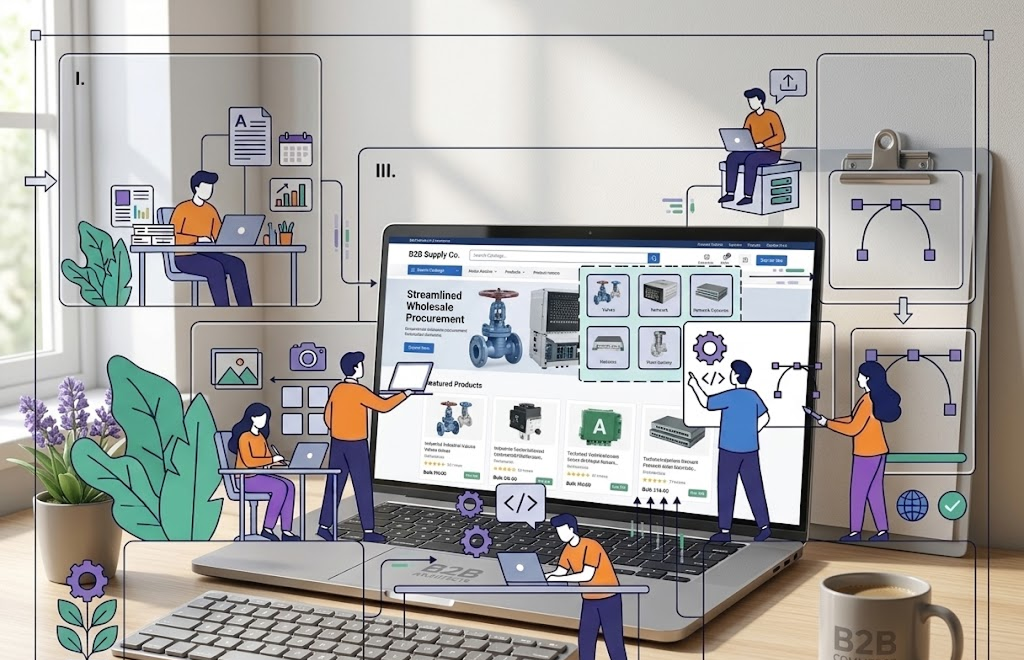
Most Ecommerce Projects Don’t Fail During Development.They Fail Because The Foundation Isn’t Clear From The Start. Book A Session With Our Team To Review Your Current Plans, Identify Gaps Across Architecture, Integrations, And Platform Decisions, And Define A Clearer Path Before Development Begins.