Why Manual Quoting is Slowing Down Your B2B

Introduction
In B2B sales, momentum is everything. Buyers move forward when decisions are easy, information is clear, and responses are fast. But in many organizations, quoting—the critical step between interest and purchase—is where that momentum breaks down.
Instead of accelerating deals, traditional quoting processes slow them to a crawl.
The Reality of Traditional B2B Quoting: A Bottleneck of Fragmented Workflows
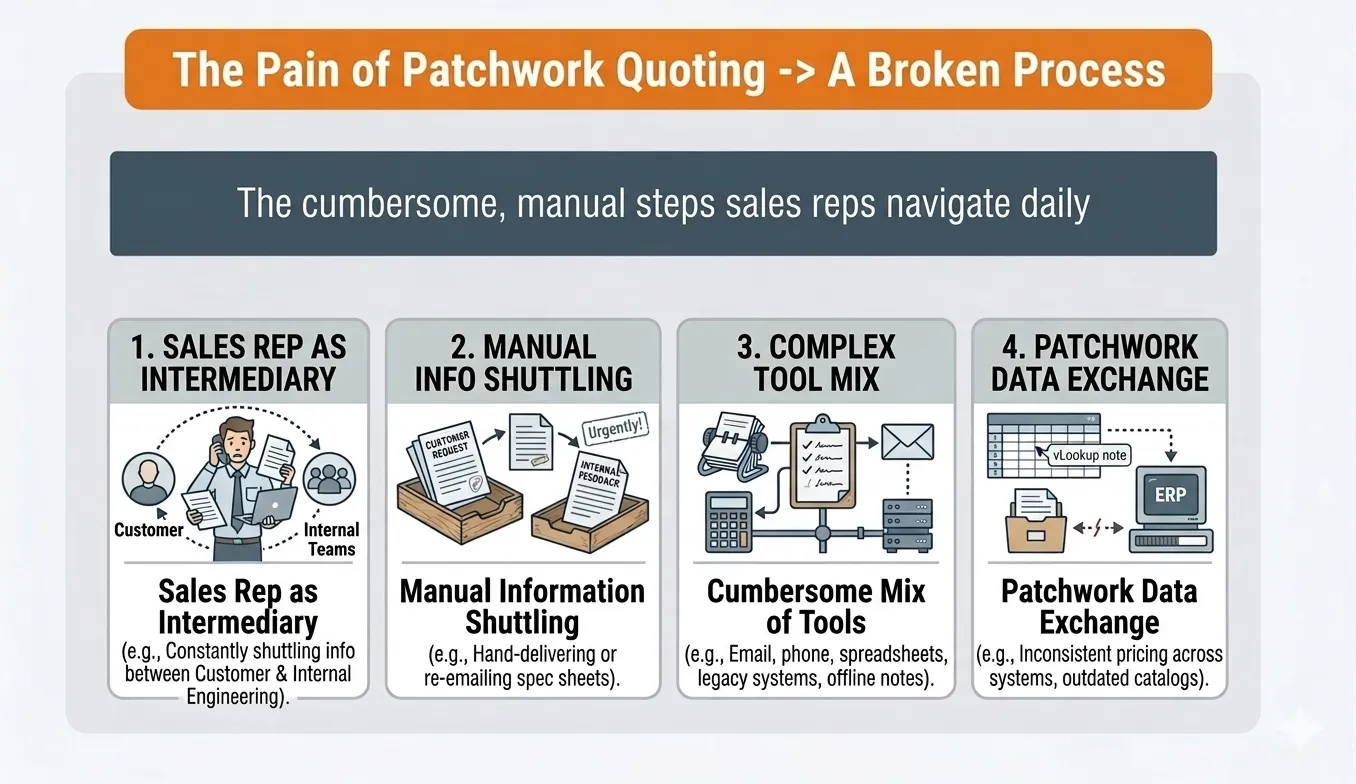
In many B2B organizations, quoting is far from a streamlined, efficient system—it remains a patchwork of manual, disconnected steps. Sales reps often serve as intermediaries, shuttling information between customers and internal teams while assembling quotes through a cumbersome mix of tools and channels.
The process typically relies on:
• Email threads, phone calls, and manual follow-ups for communication
• CSV files, and legacy ERP systems for data exchange
• Large, complex catalogues
•Complex pricing rules based on customer contracts and the company global policies
With no single source of truth, every quote request triggers endless coordination: clarifying requirements, checking pricing, confirming availability, validating inventory, securing approvals across sales, finance, and engineering, and manually re-entering data between disconnected systems.
Multiple versions of the same quote circulate across inboxes, shared drives, and chat threads, leading to confusion, misalignment, and version-control issues. Each step—searching for the latest pricing, validating stock levels, recalculating discounts, or chasing internal sign-offs—introduces friction and delay.
What should be a fast, structured, and repeatable process instead becomes a high-overhead coordination exercise. Traditional B2B quoting isn’t really a system at all—it’s a workflow bottleneck defined by manual effort, scattered tools, and constant back-and-forth rather than speed or accuracy.
Slow Response Times Kill Buyer Momentum
Every delay in quoting has a direct impact on the deal.
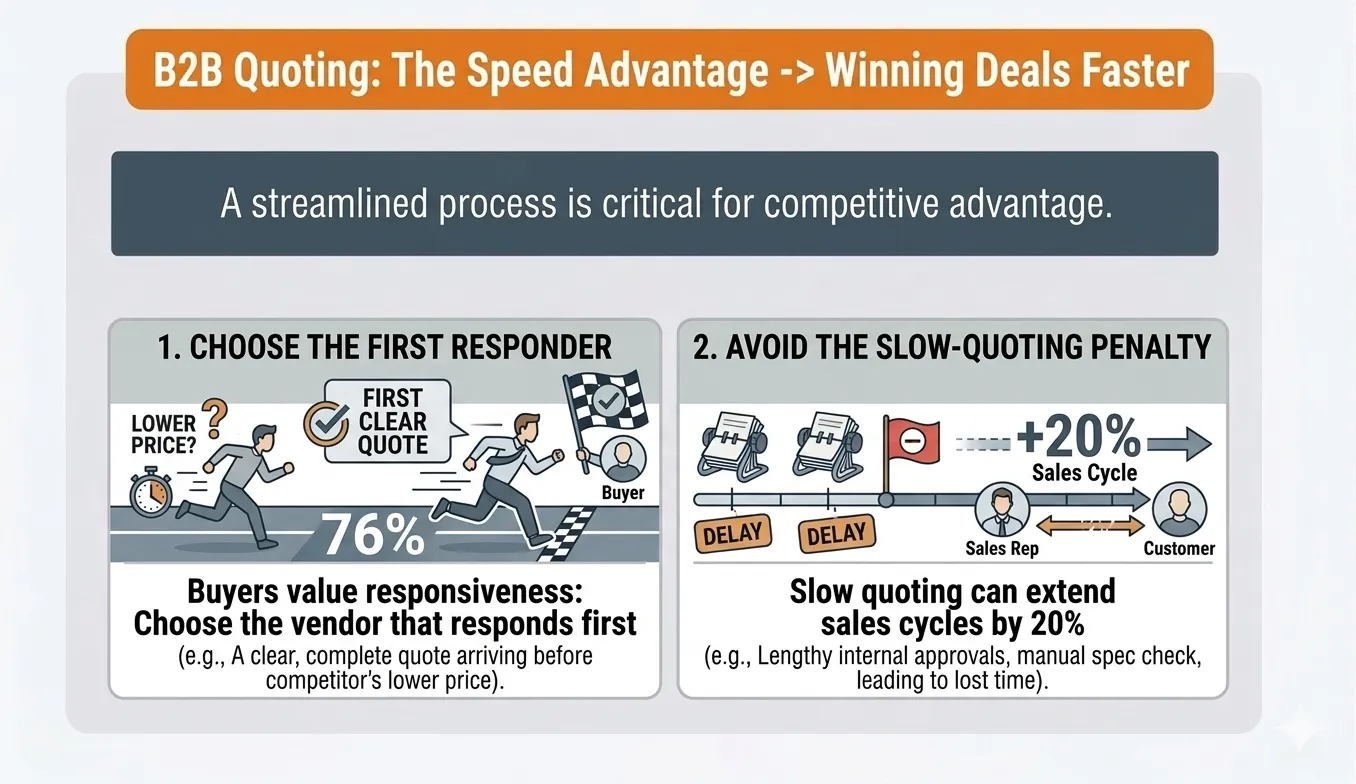
What should take minutes often takes days—or even weeks. During that time, buyers lose urgency. Priorities shift. Competitors step in with faster responses.
The data is clear:
• 76% of B2B buyers choose the vendor that responds first with a clear quote—even if it’s not the lowest price
• Slow quoting can increase sales cycle length by 20%
In B2B, speed doesn’t just influence decisions—it determines them.
Speed isn’t just operational efficiency—it’s revenue.
Manual Processes Are Prone to Errors
Manual quoting introduces risk at every step.
Manual quoting introduces risk at every step. In environments with large, complex product catalogs, managing product data through disconnected tools becomes increasingly unreliable. Pricing—often governed by contract-based agreements, volume tiers, and customer-specific terms—is applied inconsistently when handled manually.
Complex configurations are easily misinterpreted. Discounts, taxes, and contract terms are adjusted by hand—and frequently misapplied. Even small mistakes—like incorrect SKUs, outdated catalog data, or misaligned contract pricing—can lead to rework, delayed negotiations, and loss of customer trust.
These aren’t minor issues. A single error can erode margins or derail an entire deal.
Lack of Pricing Consistency and Control
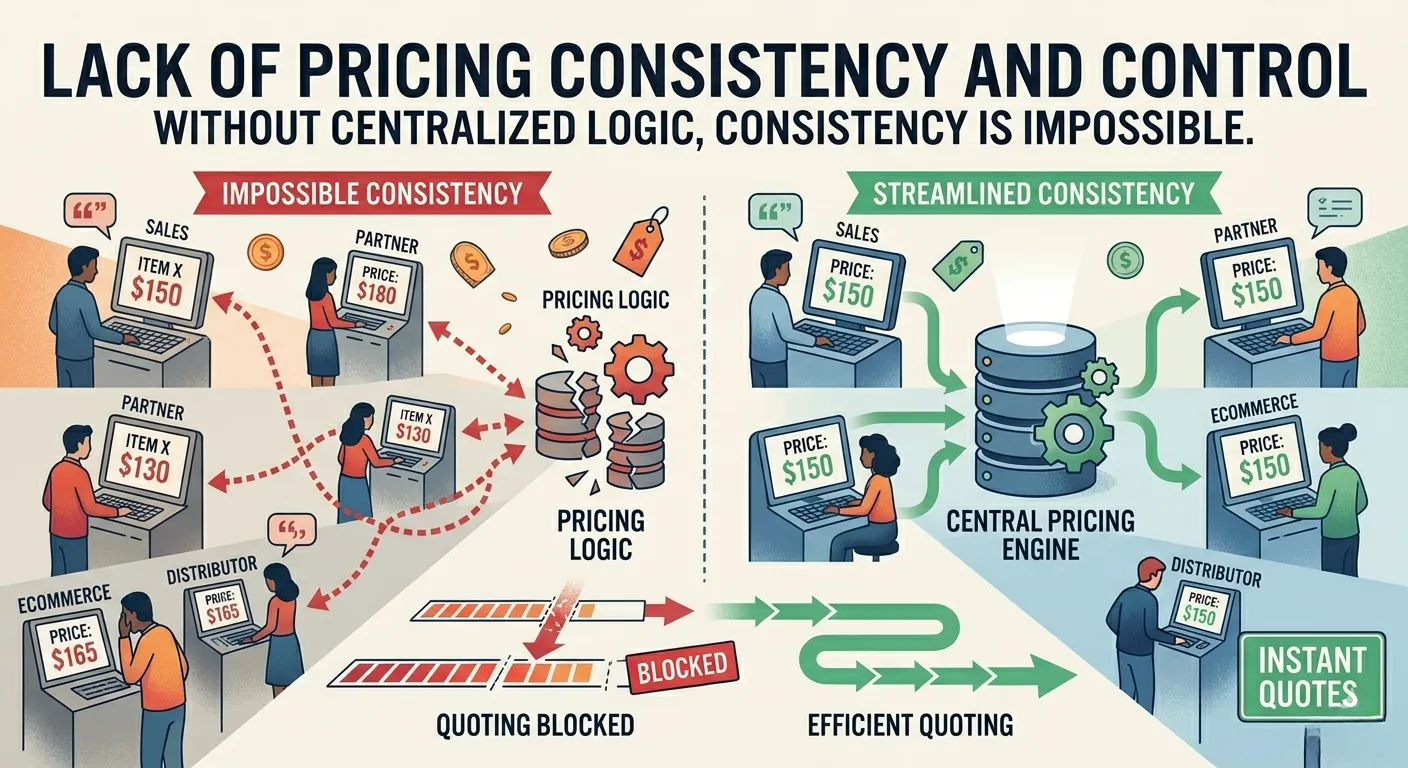
Without a centralized pricing logic, consistency becomes impossible.
Different sales reps may quote different prices for the same product. Discounts are negotiated ad hoc, often without clear guardrails. Contract terms are applied inconsistently across deals.
This lack of control doesn’t just create internal confusion—it directly impacts profitability and customer trust.
Hidden Revenue Leakage
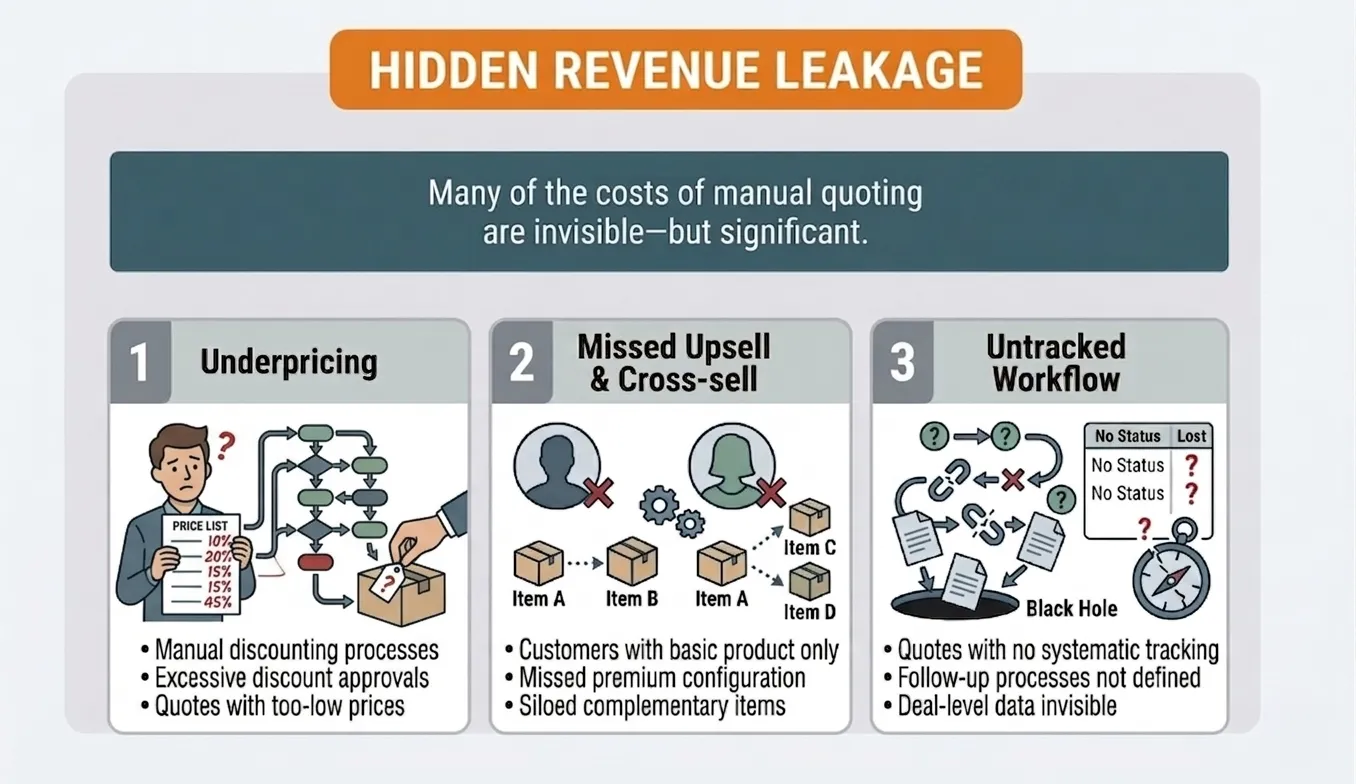
Many of the costs of manual quoting are invisible—but significant.
For engineers and procurement teams, this creates a more unified experience:
• Underpricing due to manual discounting
• Missed upsell and cross-sell opportunities
• Many of the costs of manual quoting are invisible—but significant.
Manual quoting lacks the structure needed to systematically capture value. As a result, revenue leaks quietly across the process.
More broadly, businesses can lose 15–30% of potential revenue due to operational inefficiencies like these.
These losses don’t show up as obvious failures—they accumulate across small gaps in pricing, follow-up, and execution.
Inefficient Use of Sales Teams
Sales teams are one of the most valuable assets in any B2B organization—but manual quoting limits how effectively they can operate.
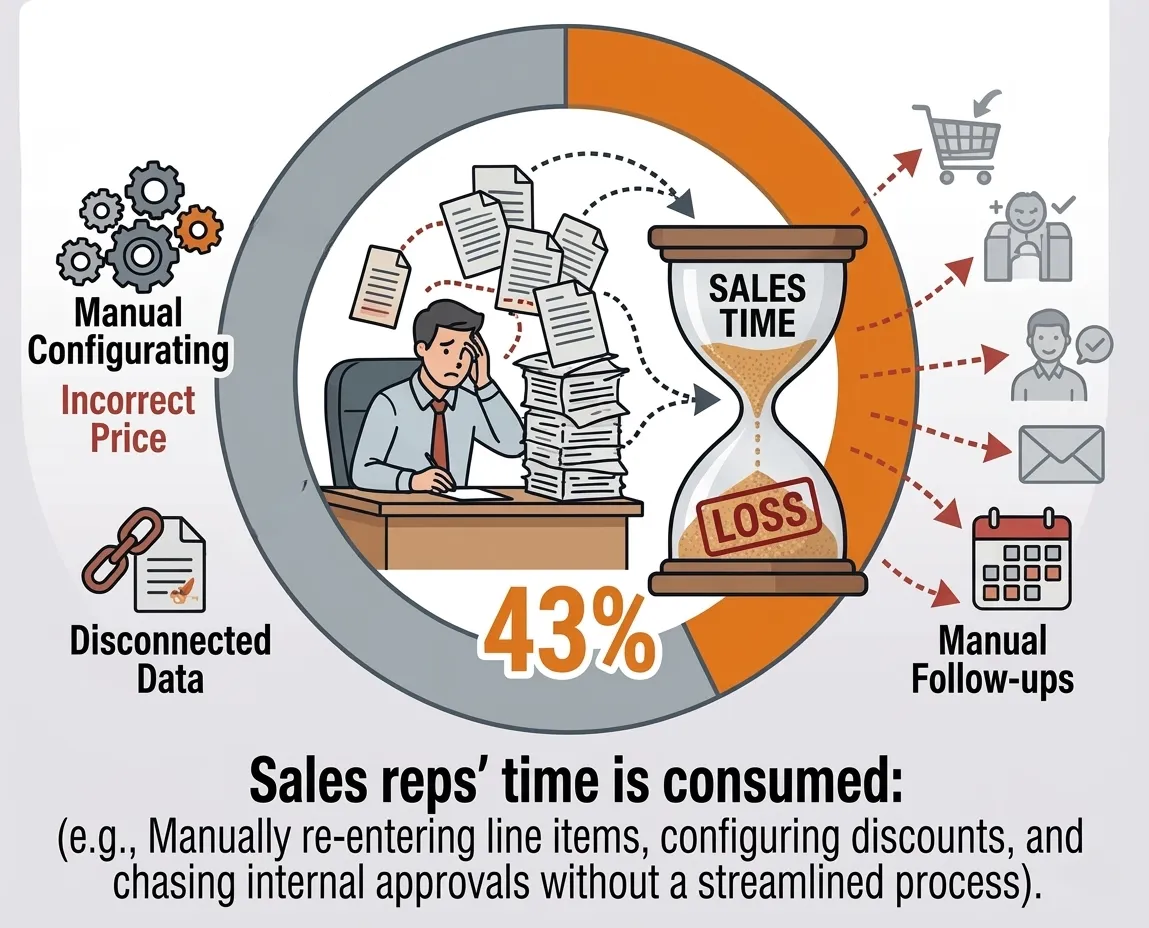
Instead of focusing on selling, reps spend hours on administrative work: preparing quotes, gathering information, coordinating approvals, and updating spreadsheets.
In fact:
• 43% of sales reps say generating quotes is the biggest time drain in their process
Manual quoting turns salespeople into processors instead of revenue drivers.
Complexity Makes Everything Worse
The more complex the product, the more fragile the manual process becomes.
Configuring products often requires engineering input. Translating customer requirements into the correct SKUs is difficult and time-consuming. Validation steps multiply, and each one adds delay.
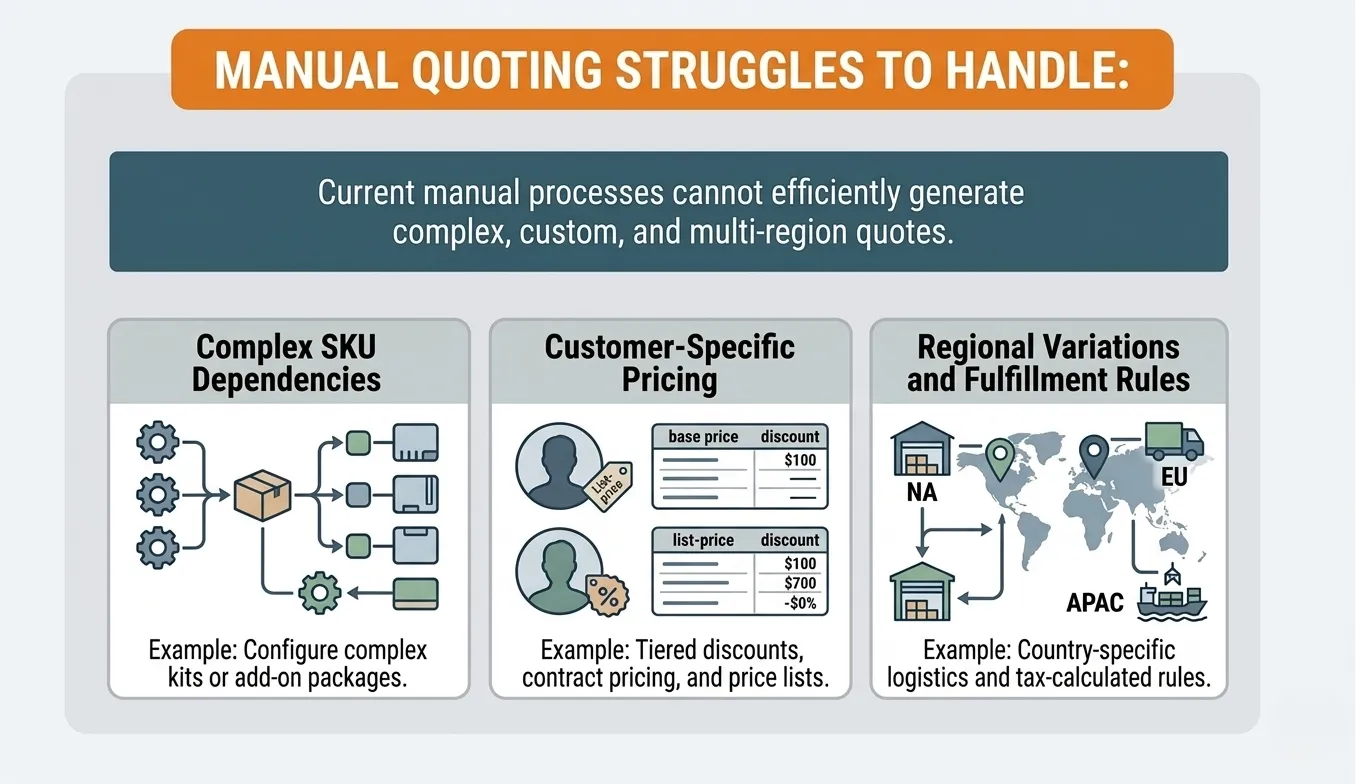
Manual quoting struggles to handle:
• Complex SKU dependencies
• Customer-specific pricing
• Regional variations and fulfillment rules
What was already inefficient becomes unsustainable at scale.
Poor Buyer Experience in a Self-Service World
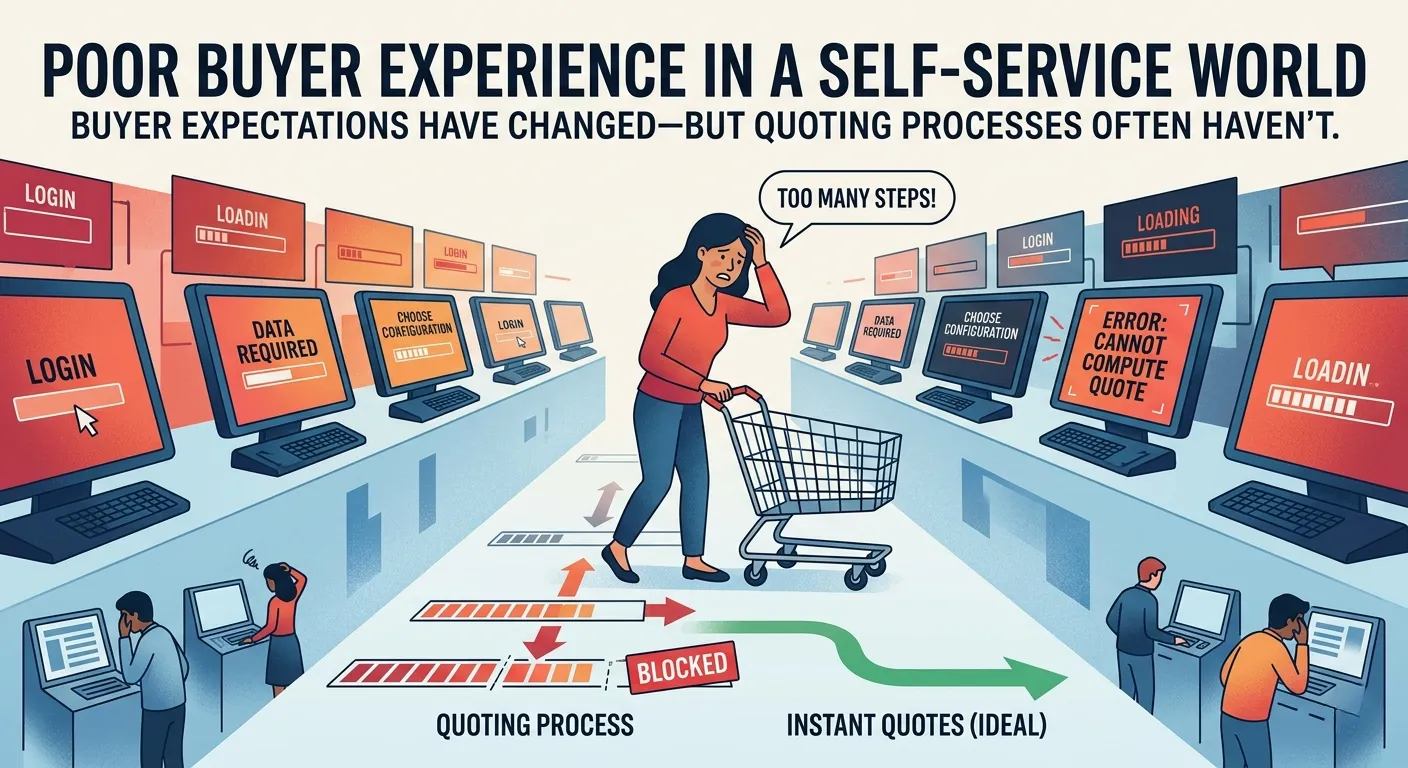
Buyer expectations have changed—but quoting processes often haven’t.
Today’s B2B buyers expect the same speed, transparency, and ease they experience in digital environments. They want real-time pricing, clear options, and immediate feedback.
When quoting is slow and manual, it creates a disconnect between how buyers want to buy and how companies enable them to buy.
And when that gap exists, buyers don’t wait—they switch.
Lack of Visibility and Tracking
Manual quoting also limits visibility across the sales process.
There’s no centralized way to track quote status, monitor progress, or identify bottlenecks. Conversion rates are difficult to measure. Pricing effectiveness is hard to evaluate.
This lack of visibility contributes to missed opportunities:
• 63% of teams report missing upsell and cross-sell opportunities due to poor visibility
Without data, optimization becomes guesswork—and inefficiencies persist.
Manual Negotiation Slows Down Deals Further
Negotiation is a natural part of B2B sales—but when handled manually, it becomes another source of delay.
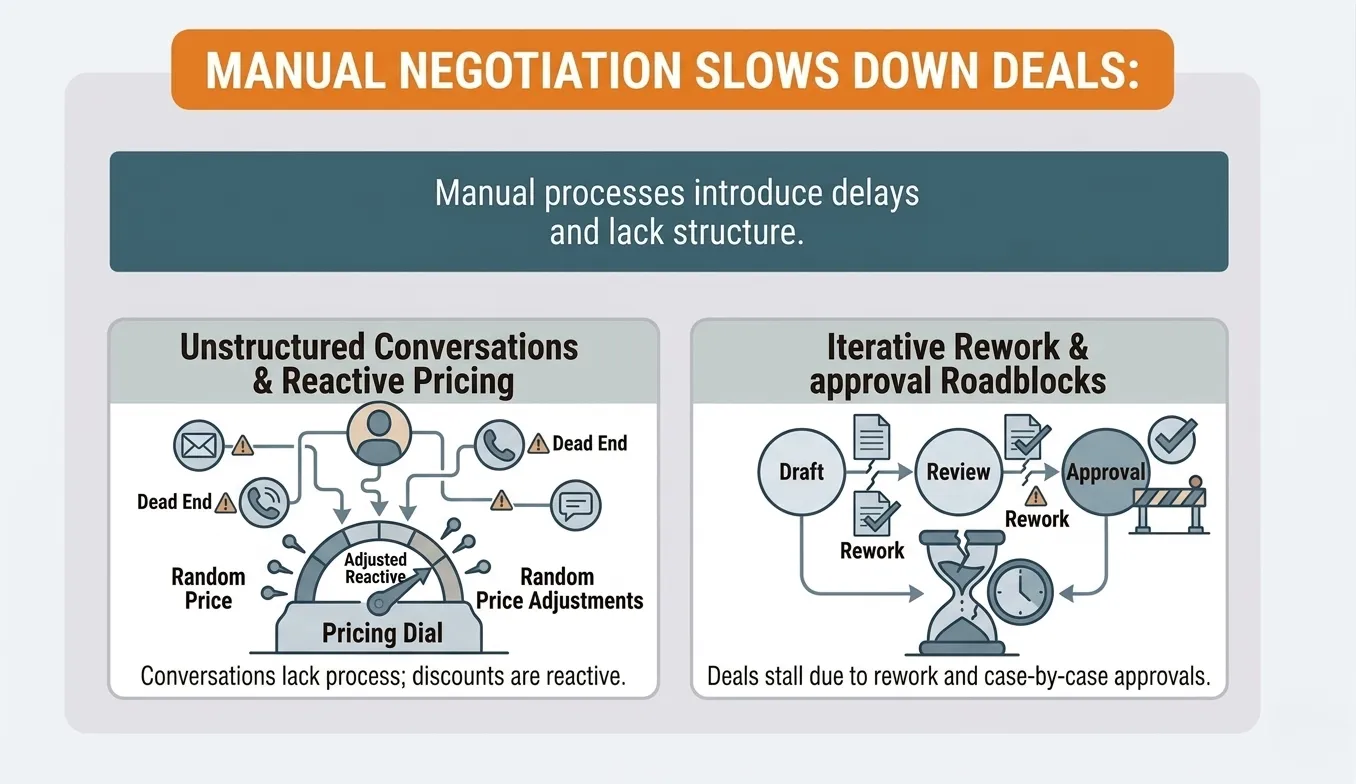
Conversations happen across emails and calls, with no structured process or guardrails. Discounts are adjusted reactively. Approvals are handled case by case.
Even after initial quotes are sent, deals slow down due to rework, corrections, and repeated iterations—further extending the sales cycle.
Momentum continues to erode with every step.
The Compounding Cost of Delay and Inefficiency
Individually, each of these issues is manageable. Together, they create a system that consistently slows down revenue.
Sales cycles grow longer. Operational costs increase. Errors become more frequent. Buyer experience declines.
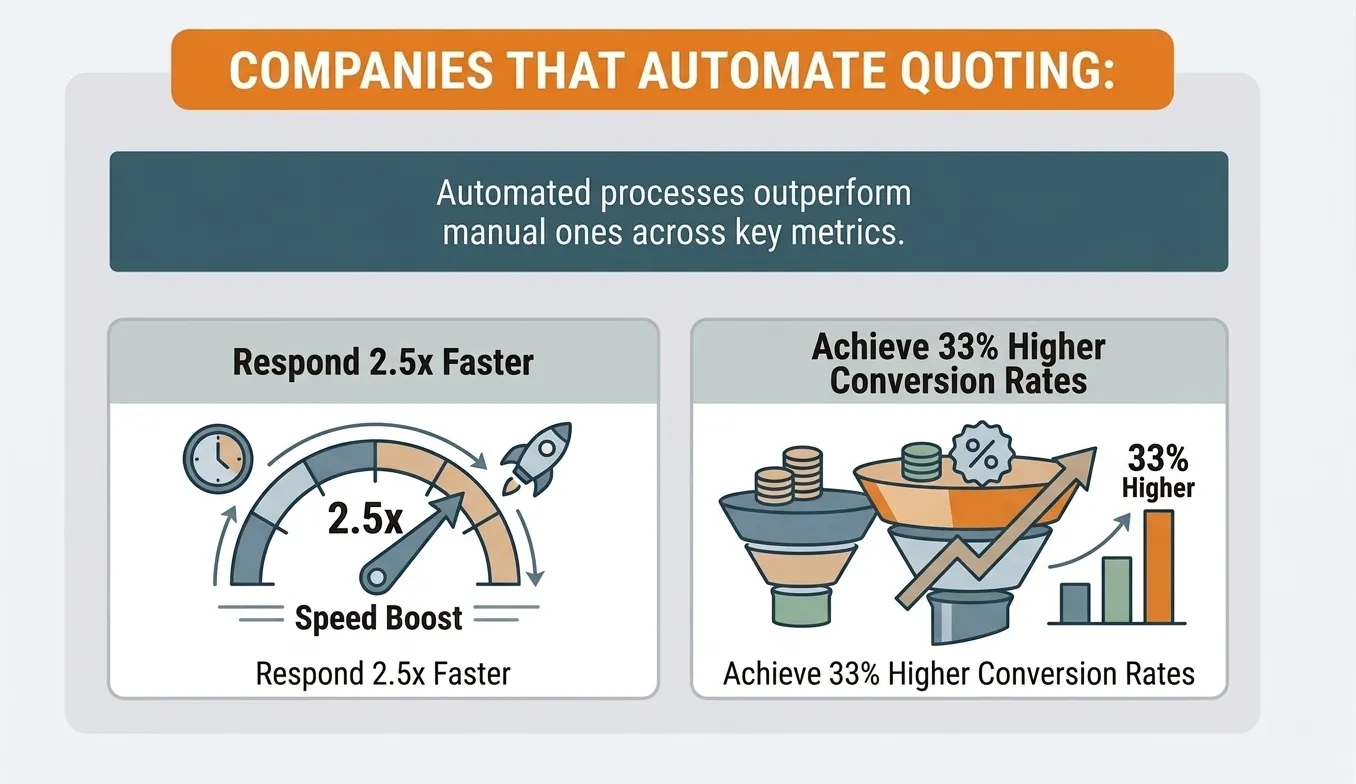
Meanwhile, companies that automate quoting:
• Respond 2.5x faster
• Achieve 33% higher conversion rates
The gap between manual and modern approaches is no longer marginal—it’s decisive.
The Bottom Line
Manual quoting doesn’t just create inefficiency—it disrupts momentum at every stage of the buying process.
In a market where speed, accuracy, and experience define success, relying on manual workflows is no longer sustainable.
The question is no longer whether quoting can be improved—but how quickly organizations can move beyond manual processes to keep up with modern B2B demands.
Introduction
The Reality of Traditional B2B Quoting: A Bottleneck of Fragmented Workflows
Slow Response Times Kill Buyer Momentum
Manual Processes Are Prone to Errors
Lack of Pricing Consistency and Control
Hidden Revenue Leakage
Inefficient Use of Sales Teams
Complexity Makes Everything Worse
Poor Buyer Experience in a Self-Service World
Lack of Visibility and Tracking
Manual Negotiation Slows Down Deals Further
The Compounding Cost of Delay and Inefficiency
The Bottom Line
Get Your Free Quote Feature list
Fill out the form and pick a time that works for you. We’ll walk you through how your current quoting process works today, and show you how it can be structured into a faster, more reliable flow.

Fill out the form and pick a time that works for you. We’ll walk you through how your current quoting process works today, and show you how it can be structured into a faster, more reliable flow.